Content

Showing posts with label Adam Cancryn. Show all posts

Redemption and rugby: This (could be) the Maurice Clarett story

March 28, 2013 2 comments

By Adam Cancryn

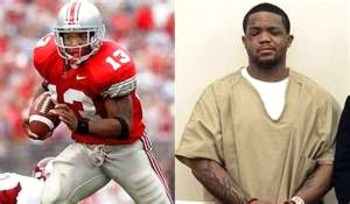
Former All-American-turned-NFL washout Maurice Clarett is the unlikely ambassador who could vault U.S. rugby sevens into the national spotlight.

Maurice Clarett is training for a comeback.

Yes, that's a story we've heard many times before. There was 2004, when the Broncos took a third-round flyer on the Ohio State running back, even though he hadn't played in a year.

Then came 2005, when those same Broncos released him and Clarett went looking for a new team. He never got the chance; an armed robbery conviction landed him in jail for four years.

Finally free in 2010, Clarett caught on with the United Football League's Omaha Nighthawks. It was comeback time again for the one-time Parade All-American. Yet within 12 months, Clarett was back on the street.

Three strikes, the saying goes, and you're out. So you'd be forgiven for wanting to skip to the seemingly inevitable end of this latest attempt, where an unemployed Clarett fades back into anonymity. And we might indeed get there. But there's a reason that this time might be different, a reason that might be worth just the slightest shred of optimism.

The reason is that Clarett is not training for a return to football. No, the now 29-year-old who rushed for 1,237 yards as a college freshman and scored the national championship-winning touchdown has instead set his sights on rugby. The U.S. men's rugby sevens team, to be exact.

In most cases, that'd be the punchline to a sad career. The washed-up athlete, grasping for the last remaining bits of glory by slumming it in any sport that'll take him. Not with Clarett, though. Not when his comeback could hold the key to the future of U.S. rugby. Not when success here might mean a second chance for all the other athletes who were just a bit too small, or too injured, or too immature their first time around.

If you haven't heard of rugby sevens, you will soon. It's the newest Olympic sport, a stripped-down version of traditional 15-man rugby union that eliminates the brutal scrums and no-necked enforcers most commonly associated with the sport. In their place are the equivalent of seven running backs per side who scramble up and down a spacious field in what, to the uninitiated, can look like a well-coordinated mix of football, soccer and Calvinball.

It's a game that emphasizes speed, power and broken-field running, so it's no mystery that Clarett would want to give it a shot. The U.S. is stocking up for Rio in 2016, and what it lacks in homegrown rugby talent it's looking to poach from the nation's football fields. Already the team boasts ex-Dolphins safety Miles Craigwell and ultra-fast former D-II track and football star Carlin Isles, the latter of whom's highlight reels have introduced many an American to rugby sevens in the space of the one year he's played the sport.


But it is Clarett who could serve as the inflection point. He is the high-profile figure the football-to-rugby migration needs, the one who's second act could be as not just a rugby star but an ambassador for the game. His success could convince others toiling in professional football's lower leagues, or staring down the ends of their college careers, to pick up the odd-shaped ball and give it a go.

There would certainly be no shortage of candidates. For all the players drafted into the NFL each year, there are multiple times that many who were too small (like the 5'8," 160-pound Isles), or buried in the depth chart (like Craigwell) or just not ready for the spotlight, like Clarett. Bringing just a fraction of those over to rugby sevens would flood the U.S.'s pipeline. Americans always boast that the U.S. could win gold in any Olympic sport if it put even half the resources into it that it does football or basketball. Rugby sevens represents the chance to prove that, and it starts with Clarett.

Which is why this time, the comeback story might be different. There's still a long way to go; rugby sevens requires the constant running that football players aren't conditioned for. And Clarett will never be his otherworldly 20-year-old self again. But his training thus far has drawn raves.

"He's ridiculous. That's all I can say," Tiger Rugby Olympic Development Program Director Paul Holmes told Rugby Magazine last week. "His footwork is phenomenal. He's nowhere near conditioned for rugby, but that will come. ... The stuff he's doing in the gym right now, he's just ridiculous."

This is Clarett's fourth chance, a rare shot at rewriting an ending that by now we all know by heart. The hope is that he realizes that, and that he realizes his fortunes are now tied to the fortunes of all those just like him. The hope is that he shows up to training each day, pushed by his football failures and pulled forward by the allure of what could await him and U.S. rugby sevens.

Adam Cancryn is an editor and co-founder of Began in '96.
Read more »

A castle for a King: How Peter King, Bill Simmons and the top 0.1% are changing sports media

March 25, 2013 3 comments

By Adam Cancryn

The inevitable rise of writer-centric sports sites, and what it means for the rest of us.

Kinglandia. That's the working title for Peter King's new standalone NFL website, a Sports Illustrated offshoot aimed at turning his stardom into a lucrative franchise. It's also a particularly appropriate title, given the site's place within a major shift taking root across journalism; call it the medievalization of media.

In short, what's happening in this: Major publications are spinning their most popular writers off into separate entities. Those writers are given their own platform and near-complete control of it. The branding, design and content is tailored specifically to promote them. They get to write what they like, hire who they like and yet still enjoy the financial and operational security of being attached to a large media company.

It's The Dream, and it's one that the most famous 0.1% of reporters are or will be living. Longwinded blogger-turned-longwinded ESPN property Bill Simmons lords over Grantland, New York Times sourcemonger Andrew Ross Sorkin sits at the helm of DealBook and Andrew Sullivan — until he struck out on his own — watched over The Daily Beast-backed The Dish. Now King is ascending to the top of Kinglandia. These are the industry's dukes, overseers of their respective fiefdoms in a world controlled by media conglomerate kings. It's a hierarchy straight out of the 1600s, and one writers and readers will become increasingly familiar with. And it's technological progress we have to thank for this blast from the past.

***

TO VARYING DEGREES, these fiefdoms are ego projects for those at the center of them, a chance to indulge their entrepreneurial spirit without taking any real risk.* They get to be the player-coach, simultaneously running the team and leading it in scoring. For that privilege, they get paid. King will reportedly make $1.5 million per year under his now contract, which would be encouraging amid journalism's perpetual financial flux if SI and its corporate parents did not just finish firing a bunch of reporters that likely worked for a fraction of that Kinglandia pie.

*For what would be the worst that could happen to these stars? Their site fails and they're brought back under the umbrella. They retain both their popularity and their job, and likely never put any personal money at risk. Maybe there's an unflattering post-mortem on your failure, but at this level you're getting criticized every day anyway, for both legitimate and illegitimate offenses.

But such is the state of the game right now. The peaceable media landscape dominated by a few central players is long gone, leaving the world fragmented and its inhabitants scattered to the winds (or in this case, to the far corners of the Internet).

Within that environment, it's no longer worth chasing the widest audience. You could be the largest sports journalism organization in the world, and Bleacher Report will still come along and plant its flag on your best land, with few repercussions. No, it's now about locking down the most dedicated audience, that however-many online avatars ferociously clicking and consuming and refreshing your site all day long.

And that's where the Peter Kings of the world come in. In exchange for that bloated payday and ego indulgence, you get their soldiers, the people hanging onto King's every inane Tweet about coffee or the delays on the Acela train to Boston. They're clicking and commenting and sharing and spreading King's good word, all the while lining the pockets of the real king, SI. That's much more efficient than chasing each one of those soldiers down and begging them to side with you over the next faceless monolith offering pretty much the same perks.

Meanwhile, you're also locking down that wildly popular writer with the sweet promises of financial security and editorial autonomy, ensuring that he doesn't take those loyal soldiers to the kingdom next door.

***

TECHNICALLY, THIS ISN'T a new concept. Newspapers have always had columnists, websites have commentators and TV has pundits. But it's nevertheless a significant leap. As writers develop their reputation more through outside sources — Twitter mainly, but to some degree Facebook and Instagram, etc. — rather than through their main work, they've become more detached from their employers. Joe Weisenthal is @TheStalwart just as often as he's Business Insider's Joe Weisenthal, for example. Same for Fox Business Network's Charlie Gasparino, or ESPN's Adam Schefter. It follows, then, that the next step would be to take advantage of that divergence and make their work "independent" too by franchising them.

This is something that you'll see particularly in sports. Business, tech, politics and every other subject have their larger-than-life figures, sure, but sports is different because its readers are the ultimate lemmings. A substantial chunk of sports fans are obsessives about their team, and that obsessiveness extends to the writers that feed them the information they crave. Keep them well fed, and they'll latch onto a news source. Take a look at Schefter's Twitter timeline, if you're skeptical, or the comments section on Jason Whitlock's blog. The degree of interaction that the sports-loving population wants is unparalleled (and a little scary at times). If TV made newspapers' top columnists into famous faces, then social media have shown that they can make the right people into industry rock stars.

Publications (some faster than others) have recognized that. Rather than let their top guy appear on ESPN in exchange for "brand exposure," they're instead setting him up with his own podcast or YouTube channel, crossplatforming him like ESPN did in putting Simmons on its NBA coverage, or SI parent NBC did by putting King on Sunday Night Football telecasts. Everyone is multimedia now. Everyone is battling on every front for eyeballs.

***

GRANTED, MUCH OF THIS is nitty-gritty, intraindustry stuff. The average fan doesn't care how journalists are making their nut, the same as journalists don't care that Knicks-obsessed Sal from Islip finally locked down that client his midmarket insurance agency has chased for years. But what all of this does mean for the broader public is that the sports media's titans are expanding their reach, even if it doesn't look like it on the surface.

Simmons might have his own fiefdom, but he's still an ESPN lackey, as his recent Twitter suspension demonstrated. King and his crew are extensions of SI. The high-profile Sports On Earth poached great writers from around the nation and consolidated them under the Job Eliminator2000 robot better known as Gannett Co. Each time this happens, the local and regional papers and TV stations are the losers. The biggest companies gain greater control over the news cycle, even as your favorite writers champion their newfound autonomy.

For journalists, and anybody who aspires to write sports in particular, the consequences are a bit more nuanced and unpredictable. What we know is that more company resources are being funneled into fewer pockets; the most popular individual is worth increasingly more than a handful of hardworking, yet no-name, writers. That's not good for sports journalism's already notoriously low starting salaries.

But at the same time, each new fiefdom means another stable that needs to be filled with reporters, likely younger ones with social media skills and low pay standards. Get hired, and you get instant national exposure and a head start in the race to join the franchised 0.1%. The traditional climb-the-ladder method of career advancement is no longer relevant in that situation. So it's a tradeoff of more jobs and exposure vs. less pay. Not great, for sure. Yet one that many would take.

More unpredictable is how medievalization alters the dynamic of employer and employee. If ESPN can spin off Simmons & Co. and ostensibly make a profit, what's stopping a private equity firm or venture capital company from doing the same? Why invest in the expensive, bloated kingdom if you can pick off their most popular dukes and raise an army of your own? Sure, a business site brought to you by Bain Capital might not work for obvious conflict-of-interest reasons, but an NHL site backed by them? It's possible.

It's early yet. Grantland is still in its infancy, and Kinglandia is a few months away. It remains to be seen how FOX and some of the other big boys will respond, and whether writers will get more entrepreneurial. But the winds have changed, and there's power to be grabbed. No doubt some of the biggest names in the business are eyeing a castle of their own.

Adam Cancryn is a co-founder and editor of Began in '96.

**A few caveats: I focused only on legacy media launching separate sites on the backs of their most popular writers. This doesn't even begin to contemplate the impact of the rest of sports media, from Gawker's Deadspin and Vox Media's SBNation down to independent sites like Began in '96. That'd take far more words than is worth spilling, and I wanted to narrow it to just the outlets that account for the largest share of industry profits and readership. That landscape is also much more dynamic and carries substantial promise, and there are some interesting business models that might arise there. 
It's also not lost on me that these smaller sites have also disrupted the climb-the-ladder dynamic; see the any number of writers who franchised themselves on their own or leapt to more mainstream outlets. And Kickstarter adds a whole new element to the mix, raising the question of what it takes to get readers to fund the franchise. Who knows what'll happen with all that. The industry is a source of constant innovation. But for these lumbering mainstream outlets, this idea of putting writers ahead of their own brand really is something new. The question is whether, in the end, it benefits the employees or the employers, the dukes or the kings.
Read more »

The Rebel we need

March 21, 2013 0 comments

By Adam Cancryn

Marshall Henderson is loud, fun and a personification of our changing attitude toward college athletics.

Has there ever been a player so brash — and yet so beloved — as Marshall Henderson?

The Ole Miss guard (by way of Utah, through Texas Tech and South Plains Junior College) defies all convention, especially in an old-school college basketball world built on the bronzed pillars of team play, scrappiness and a tear-stained "One Shining Moment." He's loud, cocky and downright infuriating. He's taken every necessary step toward becoming the sport's central villain, the latest in a long line of players we love to hate. And yet Henderson has become simply a player we love.

Coaches and teammates lavish praise not just on his play, but his personality: "It's like traveling with the Beatles," Coach Andy Kennedy gushed to the Times. Broadcasters can't get enough, and neither can the press. Ole Miss turned down 80 interview requests in the past week, only for Henderson to pop up on Twitter to announce, to much fanfare, that he'd won 10 games of beer pong.

And as far as the rest of us, we've been hooked. Ever since he led the Rebels to a win over Georgia and then skipped the postgame press conference because "it's Saturday night. I'm out."  Or when he paraded around the court after a 63-61 win over Auburn, jersey-popping in the face of a hostile crowd. Or when he told reporters, with no hint of shame, that the NCAA tournament was first and foremost a chance to "get this money."

Who was this skinny kid with the big mouth at the SEC's perennial basement-dweller? More importantly, why was he winning so much, and then acting like a normal college kid, rather than the PR-infused mumble drones we've become accustomed to? Few players can bring that degree of braggadocio and then back it up. Henderson is perhaps the only one in recent memory that's done that and simultaneously won the public's heart.

Henderson's meteoric rise tells us, though, as much about us as fans as it does about one player's unique energy. The NCAA throughout history has trumpeted as college legends those that fulfill its ideal image: the humble student-athlete, playing his heart out for team and school. With some exceptions, it's been a successful campaign. In turn, it bolstered the NCAA's own image as wholesome do-gooder giving kids a chance at their dreams.

But that perception is slowly dissolving. The past few years have revealed the organization as more sinister, more exploitative than we'd like to believe. We know something is a bit off about the whole process, and while we haven't put our finger completely on it yet, we're getting closer. In the meantime, it's changed our view of the athletes that are shuffled in and out of the system: Maybe the universities don't have their best interests at heart. Maybe one-and-done isn't so bad after all.  Maybe they do deserve compensation. Maybe, just maybe, it's all about getting this money.

Henderson has taken all of our quiet unease and fed it through a bullhorn. He's the NCAA's worst nightmare, the Rebel putting the system's hard realities on blast. He's the one who realizes it's all in the game, and is taking that game for all it's worth.

Now Henderson stands on the precipice of it all, just a few wins from becoming a tournament icon, enraging opponents and winning legions of new fans. The tide is turning against the NCAA's convoluted approach to amateurism, and this next week mark a major step in that process.

It's not a lost irony that the NCAA would profit (as always) from his success, with the ratings and merchandise and such. But those are short-term benefits at the expense of the NCAA's long-term decline. Marshall Henderson isn't the antihero that the NCAA deserves, but he's the one that the rest of us need.

Adam Cancryn is an editor and co-founder of Began in '96.
Read more »

Seeberg, Sullivan, Andreu, Lollar and Baker: These are the little people

January 23, 2013 2 comments

By Adam Cancryn

The people harmed in the making of heroes.

Lizzy Seeberg. Declan Sullivan. Betsy Andreu. Richard Lollar. Jacinth Baker.

Remember those names. Those names belong to the little people. They belong to the ones who got in the way. The ones who threatened a Very Important Person, and in the process were defamed, tortured and even killed.

***

Lizzy Seeberg. She was 19 years old in August 2010, a freshman at St. Mary's College taking her first steps toward becoming a nurse. By September, she was dead.

What happened in between is well-chronicled and yet still shrouded in mystery.We know that Seeberg was allegedly assaulted in a dorm room one night by a Notre Dame football player, an attack cut short only by a knock on the door. She later told her friends about the episode, and then reported the assault to Notre Dame police, submitted DNA to the local hospital and sought counseling.

Then came the threats. "Don't do anything you would regret," a text from one of the player's friends read. "Messing with notre dame football is a bad idea."

She became so fearful of the backlash that she went out of her way to show support for the Fighting Irish, donning Notre Dame gear and attending the football team's home opener. That night, Seeberg would watch as her attacker take the field to the approval of thousands of fans around her. The next week, she was found dead, stomach pumped full of anti-depressants.

That's what we know. It's been more than two years now, and there have been no arrests. There has been no more information. Notre Dame and St. Mary's administrators have stonewalled reporters. The accused attacker, whose yearbook photo Seeberg showed to police, remains free and anonymous. In January, he suited up for the BCS National Championship Game. He continues to live his life, uninterrupted. You don't mess with Notre Dame football.

***

Declan Sullivan. A junior at that same so-called higher institution and the videographer for the Fighting Irish. He rode a scissor lift 50 feet in the air one day in October 2010, ordered up there by head coach Brian Kelly. Standing five stories above the practice field, winds whipped past him at more than 60 miles per hour. In between taping the team's workout, he tapped out a quick tweet: "Gusts of wind up to 60 mph. Well today will be fun at work. I guess I've lived long enough."

An hour later: "This is terrifying."

And then he was falling. After they finished loading Sullivan's battered body into an ambulance, practice continued for nearly a half-hour more.

An investigation concluded some time after Sullivan's death. It found that Kelly, the newly minted and high-profile head coach who put a 20-year-old 50 feet in the air amid high winds to tape a routine practice, had acted with the character and values in "accord with the highest standards of Notre Dame."

In January, Kelly led the Notre Dame football team and Lizzy Seeberg's alleged attacker onto the field for the BCS National Championship Game. As for Declan Sullivan, I guess he'd lived long enough.

***

Betsy Andreu. She's the wife of cyclist Freddie Andreu, and the ex-friend of Lance Armstrong. She is also the one who witnessed Armstrong confess to doping during a hospital visit in 1996, and who found herself alone when she refused to lie about it. Andreu endured a public smear campaign and private threats. She was "crazy," a "psycho" and a "bitch," according to Armstrong and his operatives. A message left on Andreu's phone hoped someone would break "a baseball bat over [her] head." For years, she was the villain. She was the one trying to tear down Lance, the Great American Hero. The public crushed her in its scramble to sit at Armstrong's feet.

It's been 17 years since Andreu sat in that hospital room. She is finally vindicated, yet the scars remain. Given a chance to make amends this past week as part of his public rehabilitation, Armstrong admitted to calling her crazy and a bitch, but: "I never called you fat."

A smug smile crept across his lips.

***

Richard Lollar and Jacinth Baker. Shortly after the St. Louis Rams won Super Bowl XXXIV, they went to a party at an Atlanta nightclub and never came home.

The man who knows why they were stabbed to death, and by whom, now prepares for his second shot at a title since that night in January 2000. Ray Lewis is an NFL icon and a sure Hall of Famer now, but back on that night was just the witness to a double murder. He then jumped into his limo, told the other passengers to "keep their mouts shut," and fled the scene.

Lewis would later negotiate a deal to drop the murder charges against him in exchange for testimony against two of his friends. In court, he refused to link those friends to the killings, and all were acquitted. Lewis paid the NFL a $250,000 fine and began a reinvention that turned him into the favored son of both Baltimore and the NFL's marketing team.

Lollar and Baker's murders remain unsolved, their families left with only grief and unanswered questions. As Lewis heads toward retirement and a cushy job at ESPN, Lollar's aunt told USA Today that she headed for the funeral home, "because that's where my nephew retired."

***

Lizzy Seeberg. Declan Sullivan. Betsy Andreu. Richard Lollar. Jacinth Baker.

Remember those names. Remember them when Notre Dame athletic director Jack Swarbrick tears up and promises justice over star linebacker Manti Te'o's fake girlfriend, yet issues no comment after no comment on the subjects of Seeberg and Sullivan. Remember them when Brian Kelly trots out onto a field surrounded by sea of cheering fans. Remember them when Lance Armstrong embarks on his image restoration tour, and when the cameras find Ray Lewis in the midst of his pregame histrionics.

These are just five of the millions like them in Steubenville and at Penn State and all around the world that threatened Very Important People, and then got swept aside. They are the victims of institutions that place power over justice, that enable the most heinous acts because to not do so would mean sacrificing money or status. It would mean tearing down heroes and exposing flaws. When there are only little people at stake, those like you or me, it's all just too inconvenient.

Lizzy Seeberg. Declan Sullivan. Betsy Andreu. Richard Lollar. Jacinth Baker.

Remember those names. Remember them because those in power desperately want us to forget. Remember them because it's the only way we can start to make things right.

Adam Cancryn is an editor and co-founder of Began in '96.
Read more »

2012's Best: Felix Baumgartner's uplifting fall

January 7, 2013 0 comments
Via ABC
By Adam Cancryn

Felix Baumgartner and the Red Bull Stratos team pushed the boundaries of human athleticism in front of millions around the world, and lived to tell about it. Part of a short series on the best moments of 2012.

It started with an idea.

Five years ago, Felix Baumgartner wondered whether he could freefall from the stratosphere. He had already conquered some of the most dangerous, and lowest, manmade peaks on Earth, and now it was time to set his sights a bit higher. Twenty-three-and-a-half miles higher, to be more exact. It would be a challenge bordering on impossible, less a stunt than a science experiment. And that near impossibility is what made it worth trying.

The idea went little-noticed outside of the daredevil and scientific communities at the time. The rest of us were more concerned with a different type of falling: falling stock prices, falling home values, falling dreams. A global economy built on reckless growth had risen to unsustainable heights, and then plummeted. There was no parachute to slow its descent. World leaders and individuals alike scrambled for ideas, any ideas, to bail out before we hit the ground. Amid the chaos, few had time to look to the stars with Felix, to a point in the future when we might see progress.

That point arrived on Oct. 14. But as millions around the world huddled in front of televisions and computers to watch a balloon whisk Felix away in his space-age basket, it was hard to say we’d made much progress. Nations remained wracked by conflict so endless that suffering is their way of life. Environmental disasters, both manmade and natural, kill scores and yet are so commonplace as to go almost unnoticed.

And our economic fears, persistent as they may be, have largely been displaced by mortal fears. There is the penetrating, ever-present knowledge that some stranger could shatter our very existence with the twitch of of a finger, and for no higher purpose at that. By the time the balloon reached 128,100 feet and Felix stepped cautiously onto his pod’s small external ledge, the year 2012 had been marked as the Year of Death. It was one scarred by mass killings (Aurora, Oak Creek, Minneapolis, etc.) and suicides (Junior Seau, Chris Lighty, and thousands of others). One ruined by far too many funerals and far too little hope. In the days since Felix dropped off that small ledge and down toward Earth’s ghostly visage, we are awash in more tragedy, for which there is no simple solution. At what feels like an emotional breaking point, we are at a loss for practical ideas.

Yet here against that backdrop is Felix, a speck on the screens of millions united in horror as he spins spins spins out of control against the thickening atmosphere, and then in relief as he slows and rights himself, resuming a strangely tranquil 730 mile-per-hour fall to the ground. Here he is minutes later, floating toward a perfect landing and collapsing to the parched ground, parachute blousing about him, the consummation of a near-impossible mission built on the global ingenuity, optimism and ambition we worried we’d lost forever.


It was the single greatest sports moment of the year, a seminal accomplishment for science and for space exploration, and the peak of Felix Baumgartner’s career. More than that, it was a much-needed moment of inspiration. Baumgartner fought through logistical and personal challenges over the past five years, most famously fleeing the U.S. in 2010 rather than spend another anxiety-ridden day trapped in his space suit. The single-minded pursuit of this near-impossible idea, of progress, won out.

Nearing three months after the record-breaking freefall, the world faces its own abyss. Dire political, economic and societal problems confront us, and yet we have so far clung to the ledge, refusing to part with the outdated tropes and nonsensical tradition that paralyze us. The single-minded pursuit of progress is in jeopardy.

It’s time now, in 2013, to stare into the abyss, salute, and step off the ledge. It’s time to trust that our ingenuity, optimism and ambition will pull us out of our spin and land us safely, two feet on solid ground.

Adam Cancryn is an editor and co-founder of Began in '96.
Read more »

Got to know when to hold 'em: The offseason's divergent paths

December 19, 2012 7 comments
Deadspin.com
By Adam Cancryn

The Angels, Mets and Red Sox. Three teams with the same goal, and wildly different strategies.

With apologies to Kenny Rogers, the secret to surviving the MLB offseason is knowing what to throw away and what to keep. Every trade and no-trade, signing and release, is sure to reverberate through the subsequent season, subtly tipping the scales of wins and losses. String a few good moves together, and you've set the franchise on a prosperous long-term path. Yet for every dynasty in the making, it seems there are an equal number haunted by the mistakes of winters past.

These stakes make for a kind of segregational dynamic when the weather turns and ballcaps are replaced by suits and ties. This isn't Opening Day, where hope springs eternal and everyone has a shot at glory. This is business: cold, calculating and jarringly realistic. You're either in it to win, to sell, or floundering somewhere in the middle.

Narrowed down, you're either the Angels, the Mets or the Red Sox.

While others have certainly made moves that could prove momentous down the road, these three franchises captured much of the attention this offseason. The Angels are the proud new owners of center fielder Josh Hamilton, which is the equivalent of buying a Lamborghini to wedge in between your Bentley and Maybach. Sure, it's probably too expensive and not the most practical investment. Hamilton's addiction struggles could sink him at any moment. But when everything is humming just right, it's a rare experience. After all, how many players have found themselves compared to Mickey Mantle? In Hamilton and Mike Trout, the Angels now have two. 

There was Twitter speculation that Trout could score 200 runs in front of a lineup including Hamilton, Albert Pujols and Mark Trumbo. That might sound absurd, but consider that he reached 129 runs in just 139 games during Pujols' worst year ever. Maybe 200 is a bit of a stretch, but 180 certainly seems reasonable.

Lost amid all that late-offseason excitement was the fact that Los Angeles also shored up its pitching corps. That unit held the team back in 2012, but Ryan Madson, Joe Blanton and Tommy Hanson should help on the margins and provide significant upside for an 89-win team that only needs a small boost to leapfrog its way to a division title. 

With the Angels holding all aces, the Mets can take some consolation in the fact that they are finally playing with a full hand again. General Manager Sandy Alderson warned that the rebuilding process would be lengthy, and on that point at least, the underachieving Mets have come through. But give them points for sticking to a plan, especially amid the typical New York uproar. They chose one fan favorite (David Wright) over another (R.A. Dickey), an accomplishment considering their still-stretched finances. And for all of the botched optics around Dickey's trade, they played the 38-year-old knuckleballer into an impressive haul. By adding Travis D'Arnaud and Noah Snydergaard, the Mets now have long-term solutions at catcher, shortstop (22-year-old Ruben Tejada) and for three-fifths of its pitching rotation. Add in Wright, and it's almost enough to dull the pain of being perhaps the first franchise to let a batting champ (Jose Reyes) and a Cy Young winner (Dickey) walk in two consecutive years. It could be ugly for a season or two, but Alderson and the Mets are hoarding their chips and settling in for the long haul.

Which brings us to the Red Sox, the third big-market player and perhaps the most baffling. The team's main haul so far is catcher/first baseman Mike Napoli and outfielders Jonny Gomes and Shane Victorino, which sounds like the core of a .500 team in 2009 and isn't much more promising in this day and age. Napoli is wholly unpredictable, following a standout 2011 with a .227/.343/.469 line in 2012. He also creates a glut behind the plate. The Sox already have backstops Jarrod Saltalamacchia and Ryan Lavarnway, and this offseason also added human placeholder David Ross. At first base, meanwhile, Napoli's total zone defense was a bruising five runs below average.

Similarly, it's hard to see where the impatient, low-power Gomes fits in beyond a stopgap role. He did hit .480 with runners in scoring position and two outs, but for that to pay dividends, there's a lot of work that needs to be done with the rest of the lineup. 

Victorino could be the worst signing of them all. For three years and $39 million, the Sox get an aging center fielder coming off his worst year for a price on par with with what more promising players like B.J. Upton or Angel Pagain are receiving. Not to mention that Boston already has a centerfielder in 29-year-old Jacoby Ellsbury. For those scoring at home, that's four catchers, two center fielders and approximately zero progress toward replacing the talent lost following this past year's epic collapse.

That's the difficulty with getting stuck in the middle, though. The Angels see an opportunity and are throwing everything at it in hopes of a grand payoff. The Mets are folding in 2013 and in search of a more promising future. And the Sox can either bide their time and bleed chips or jump the gun and do something crazy. Either way, you hope they have a plan.

That's how it appears now, at least. Fortunes can turn on a small decision, and the games are far from started. The Red Sox could stage a full reveal that puts all the seemingly mismatched pieces each perfectly in their place. The Mets could grow up quick, reeling off win after precocious win and wash away this year's sour taste. Los Angeles could trip and then topple under the pressure, becoming just the latest superteam to disappoint. The offseason is a crucial time, but ultimately just one hand in a long and unpredictable game. 

Adam Cancryn is an editor and co-founder of Began in '96.
Read more »

ND-Alabama: The best boring teams left

December 3, 2012 1 comments
al.com
By Adam Cancryn

Notre Dame and Alabama are the best teams left. Whether they're the most enjoyable to watch is another story.

On a crisp November night in 2011, a group of friends and I packed into a narrow Washington, D.C. bar. We were there to watch Alabama and LSU in a late-season matchup of the nation's top-ranked teams. Most everyone in that bar was there solely for that purpose too, if I recall, which was a bit odd on a Saturday night in Adams Morgan. But that's how big this game was, hyped nonstop for the past week as the most momentous meeting in recent college football history.

I hadn't seen much of either team at that point, but based on the attention surrounding them, I figured it could be a treat. At best, we'd witness some sort of history. At worst, it'd be a few enjoyable hours of football.

I was wrong. What unfolded that night was neither historic (Alabama and LSU would meet again a few weeks later in the title game) nor enjoyable. It was, quite simply, the dullest sporting experience I can remember. The teams traded three-yard runs and wobbly passes for a few quarters, crashing into each other again and again and yet rarely making it past the opposing 40-yard line. When the dust cleared, LSU had "won," 9-6, in overtime. After hanging in for the entire game in hopes that something great might happen, we fled the bar before football could inflict any more damage on our psyche.

Come the morning, though, I wondered whether I'd been watching the right channel. LSU-Alabama was hailed as an instant classic, the epitome of football at its old-school, smash-mouth best. By 1930s leather helmet standards, maybe. Here in the modern world, the term for something that produces this ugly of a box score* is "painful." The defenses were impressive, sure. But they were rarely tested, unless you count the challenge of staying awake while LSU debated which quarterback would attempt its next half-hearted throw.

* It's worth combing through the box score just to marvel at the absolute lack of offense that went on here. LSU, the best team in the country, used two quarterbacks who combined for 99 yards passing! Their starting running back averaged 1.8 yards per carry! And this was the team that won!

Needless to say, that game stuck with me in a way I imagine is most closely comparable to a bad acid trip. And this past Saturday, when quarterback A.J. McCarron flung — Tebow-like — a 45-yard touchdown pass to put Alabama up late, I immediately thought back to that night. By the time Georgia became the latest SEC team to fail at the maths portion of the game and turn three shots at the end zone into one orgy of ineptitude, that November night in 2011 was front and center in my mind. It's unavoidable now. We're in for what will surely be the most hyped snoozer of a title game possible.

That doesn't mean Alabama and Notre Dame don't deserve to be in this spot. They took care of business while others faltered, and while there are always cases to be made for other teams*, these two are abundantly reasonable choices. Fans of both schools will certainly enjoy the show.

* Florida has the best case by far, having lost only to Georgia while beating seven teams with winning records, including Texas A&M. Georgia beat just three with winning records (Florida, Georgia Southern & Vanderbilt), while Alabama lost to Texas A&M and played an easier overall schedule.

But for the rest of us: Oof. In one corner, you've got Alabama, that paragon of SEC stubbornness. Their mentality is so traditional that for much of the game against Georgia they all but abandoned the forward pass. Before McCarron's fourth-quarter fling, he'd completed four passes for 22 yards in entire the second half. The Crimson Tide's game plan is simple; they're going to run right, run left, and run up the middle and dare you to stop it. When the defense crowds the line, McCarron's leash is loosened (but just a little) to take advantage of single coverage. It's simple and effective, and brutal to watch.

I'll take three yards and a cloud of dust over Notre Dame, though. The Fighting Irish have one of the worst offenses of any ranked team this year, and are historically bad compared with previous national champions. By Sports Reference LLC's Simple Rating System, Notre Dame's offense is 1.55 points above average, good for 57th in the nation (Alabama ranked 43rd at 3.89 points). By comparison, potential title contenders Oregon, Georgia and Florida finished third, 16th and 49th, respectively. You have to go back to the 2002 Ohio State Buckeyes, quarterbacked by Craig Krenzel, to find a team anywhere close to approaching Notre Dame's lack of production. Their 12-0 record is a tribute to the defense, which held onto numerous slim leads while the offense tried to get out of its own way. That squad will have to turn in its best performance of the year against Alabama, which boasts a defense of its own that could hold the Fighting Irish to single digits.

Everyone enjoys a defensive struggle once in a while, and the national title game should certainly deliver on that. Whether that struggle is exciting is another story. There's a difference in football between competitive and enjoyable, and Alabama-Notre Dame are prime contenders to demonstrate just how wide that gap is. Keep that in mind as the chatter surrounding this game hits full volume over the next five weeks. Adjust your expectations accordingly. And if you insist on watching, do it in a group. Friends don't let friends watch a snoozer like this alone.

Adam Cancryn is an editor and co-founder of Began in '96.
Read more »

November swoon

November 12, 2012 0 comments
Via Giants.com
By Adam Cancryn

The Giants' ensured another poor November with a loss to the Bengals this Sunday, but that's no reason to panic.

Fluttering passes, shoddy defense, drive-killing turnovers and boos reverberating throughout MetLife Stadium. It must be November in East Rutherford.

The New York Giants fell to the Cincinnati Bengals on Sunday in a game that was over just minutes after kickoff. New York gave up two quick touchdowns — including a wide-open 56-yarder to this week's Tabloid Enemy #1 — and responded over the next two hours with a series of dinks, dumps and drops that netted them next to nothing. Throw in a few bad interceptions and missed tackles, and you arrive at a 31-13 final that wasn't nearly as close as the score indicates.

The loss was the Giants' second straight this month, and the latest evidence of what remains one of the NFL's most baffling trends. Since Tom Coughlin took over as head coach in 2004, New York has christened this time of year Nosedive November. No matter their record coming in, nor their opponent, the Giants are so consistently inconsistent during this 30-day period that you can set your calendar by it.

Under Coughlin, the team is 13-21 in eight Novembers. That includes 1-2 and 1-3 in their 2007 and 2011 championship years, respectively. And this year, New York came into the month 6-2 and as talented as ever, only to fall asleep at the wheel again. Eli Manning is in the midst of the longest touchdown drought of his career. Victor Cruz, who is so good at sneaking behind secondaries, dropped a sure touchdown and finished this week with just 26 yards. The Giants' defense appeared utterly perplexed by a Bengals game plan that was just a slightly more complex version of pitch and catch.

Wideout A.J. Green sure wasn't kidding when he said there were holes in New York's secondary, but then again, all he needed to do was look at the date.

There has never been a satisfactory explanation for why the Giants lose when the leaves turn. They are notoriously fast starters, and maybe fail to adapt as other franchises adjust and gain steam later in the season. But the good news is that there is just one November game left, and history shows that things get a little better in December. Come the playoffs, their resume stands on its own. In the start-and-stop world of the NFL, you take a fast starter and fast finisher over midseason strength every time.

So a little perspective, Giants fans. As the only NFC East team above .500, this swoon has done little to damage their playoff hopes. There's no need to call for Coughlin's firing, though history has also taught us that is inevitable. There's no need to whine about Bradshaw or Cruz, though what is perhaps the most shortsighted fan base this side of the Yankees surely has done so already. (A fan tweet timestamped about midway through the fourth quarter called for for the Giants to dump all three Super Bowl linchpins, and bring in Bill Cowher.) For all the ugliness this past Sunday, little has changed.

These are the Giants, winners of two Super Bowls, masters of the hot streak. They are as talented and confident as any top team. They will still be here when it all comes down to the wire, and they will be at their best. Right now, it's only November, so take a deep breath. The best months are yet to come.

Adam Cancryn is a co-founder and editor of Began in '96.
Read more »

They just win

October 30, 2012 0 comments
Via WordCrunch
By Adam Cancryn

The Giants are World Series champs for the second time in three years. If only we knew how that happened.

When it came time to secure the San Francisco Giants' second World Series title in three years, it was a panda, a journeyman infielder, and a reliever with only one good pitch who provided the necessary push. 

For this team, that sounds about right. 

There is no deeper explanation for the Giants' blink-and-you-missed-it sweep of the Detroit Tigers. No statistical advantage or dominant player or crucial turning point. They were simply better. For four games, the Giants were better than the Tigers, and those games happened to be the last ones of an improbable championship run. 

This is part of what, I think at least, makes baseball both the most maddening and beautiful game. It's so quantifiable that everything a player does between the lines can be tracked and graphed and deciphered to inform the future. Not only that, we can even break down the things that they don't do, the choices they don't make. Few, if any, other sports offer the deep understanding that baseball's statistics provide us about individuals' strengths, weaknesses and unique abilities. 

But then something comes along and blows all of that understanding out of the water. Suddenly, Justin Verlander gives up two home runs on throwaway pitches out of the strike zone. Prince Fielder records 13 outs in 14 at bats. Barry Zito rediscovers the bend in the ball that abandoned him for the better part of a decade. Suddenly, you're sitting there with all the data in the world and no concrete answers. 

Some call that part of the game the "intangibles." I reject that term, at least in the traditional sense. Who tries harder, or who has more "heart" or "grit" or "hustle" matters only at the margins, if at all. It's the vapid go-to phrase for when we lack both the ability to understand what just unfolded and the willingness to try. 

But there is something to the concept of intangibles, even if it's been wrongly employed for so long it's become the equivalent of a sabermetrician's third rail. And it's present in all situations in life. Who at any level hasn't played a sport or given a presentation or a speech or just plain done their job for a couple of days at a level far beyond what you thought capable? Even though you haven't consciously changed anything, you're sharper. You're seeing the ball well out of the pitcher's hand. You're making solid contact, and everything feels like it's waiting just an instant longer to make sure you're ready for what's coming. 

It's a palpable feeling. And then it's over. 

Except for the Giants, that fall back down to Earth never had a chance to come. And when a couple guys are in that zone, it has a tendency to snowball. The team with few advantages on paper is now performing radically different in real life. A third baseman whose free swinging ways resulted in just 12 home runs all season will net three in one game. A 36-year-old shortstop on loan to his sixth team will get white-hot when it matters most. A reliever who throws his slider three-fourths of the time will lob an 89 mph fastball down Broadway in the bottom of the 10th. And the first Triple Crown winner in more than 40 years will stare at it for strike three. 

These are the inexplicable things that make up a short series. They are the blips, the anomalies, the quirks of the game. They are unquantifiable in a way that drives both sabermetricians and "traditionalists" mad. Over a long 162-game season, these moments are smoothed over. We know that Verlander will win a battle with Pablo Sandoval. We know that Marco Scutaro is just slightly better than average. We know that Miguel Cabrera crushes any fastball in his orbit, much less one of the 89 mph variety. 

But this was just one series, where small sample sizes are the rule. And damn the data, in this series the Giants were just plain better.

Adam Cancryn is an editor and co-founder of Began in '96.
Read more »

Why the Tigers will win the World Series

October 24, 2012 0 comments

By Adam Cancryn

The best pitcher in the game, a dangerous lineup and a shrewd manager make the Tigers the easy pick as World Series champs.

[ALSO READ: Joe Schackman on why the Giants will pull out their second title in three years]

When last we left the Detroit Tigers, they were dispatching the 95-win Yankees with an ease rarely seen in recent history. It had been six years since an AL team swept their way to the pennant (coincidentally, it was the '06 Tigers who dispatched the A's in four), during which the American League Championship Series went the distance twice and the other three reached six games.

Yet, this year the ALCS was seemingly over before we even had a chance to settle in. And even more surprising was the way in which it happened: the home-run happy Yankees striding up to the plate, grounding out weakly to short, and retreating to the dugout, bat between legs. New York's lineup of future Hall of Famers, the driving force behind the AL's best team, were left befuddled and frustrated. The series took on an air of inevitability; With the way the Tigers' staff was throwing, it became a bland march toward the requisite number of outs.

Since Detroit punched its ticket to the World Series those oh-so-many days ago, the San Francisco Giants have dominated the baseball world. They fell behind, then clawed back from a 3-1 deficit. Barry Zito channeled his 2002 self and threw a series-saving gem. Marco Scutaro and the rest of San Francisco's band of pokers and slappers refused to let strike three get by them, eventually beating the St. Louis Cardinals at their own game. They now ride into the World Series, backed by the euphoria and expectations that comes with getting all the right breaks at all the right times.

Facing the Tigers, and there is a natural urge to throw out conventional thought and join the merry journey that is the Giants. But in baseball more than in any other sport, it is most often the best team — not the hottest — that wins championships. And the Tigers are the best team by far. It will take them just five games to assert that, thanks to these five distinct advantages:

1. Justin Verlander. The Tigers' ace is perhaps the best all-around pitcher in the game, and nowhere has he proven that more than this postseason. In 24 1/3 innings, he's allowed just two runs while striking out 25, good enough to bury the notion that he's not a big-game starter. He possesses all of the necessary physical skills, but more important is the psychological impact he has on opposing hitters. Verlander can throw his fastball between 91 mph and 100+ mph at any point in the game, disrupting the conventional approach of waiting out an ace until he gets tired in the late innings. No matter the situation, the general feeling is that Verlander is going to dominate. That aura of invincibility is crucial, especially in a series where the Tigers could trot him out two or even three times.

2. Those guys behind Verlander? They're pretty good too. Look closely at Verlander's shadow. Those four athletes huddling there? That's the rest of the Tigers' rotation, each of whom can hold his own against any team. Max Scherzer finished just behind Verlander with 231 strikeouts this year, while Rick Porcello and Doug Fister formed a formidable middle of the rotation. And late addition Anibal Sanchez has allowed two runs in 13 1/3 postseason innings so far, flashing some of the brilliance that he routinely put on display in his six-and-a-half years with the Miami Marlins. The Giants' rotation can't match that depth, and perhaps even worse for them is that they likely won't have to. With Verlander ready to throw as many as three games, the Tigers might be able to pick and choose who to start, leaving the rest to shore up the bullpen.

3. Bullpen saviors. Speaking of shoring up the bullpen, it took manager Jim Leyland little time to figure out how to fix the relief woes that plagued Detroit in the divisional series. Enter Drew Smyly and Phil Coke, who combined to blank the Yankees for eight of the their 39 innings at bat. Coke shouldered the lion's share of the work, pitching in all four games, while Smyly vacated his role as a regular season starter to handle high-leverage situations. With those two available to do anything from long relief to closing, the Tigers' starters can breath much easier when they hand the ball over to the bullpen.

4. Detroit's got some scrappers too. San Francisco is successful because it makes solid contact and excels at not getting out. But what if you were told that so far this postseason, the lowest strikeout rate of the two belongs to the Tigers? Detroit struck out just 21.5% of the time, besting the Giants' 22.2%, and helping propel an offense lacking the usual standout performances from stars Prince Fielder and Miguel Cabrera. The attention will remain on those two boppers, but players like Austin Jackson, Omar Infante and Jhonny Peralta are the ones who grease the wheels and get this lineup going. Expect them to give the Giants' lesser pitchers fits, creating a lot of RBI situations for Fielder and Cabrera.

5. Jim Leyland.  It's difficult to quantify a manager's impact on a team or its overall body of work, but a general rule is that the less you think about them, often the better the team is doing. Leyland fits this bill. He doesn't overmanage like a Girardi or a LaRussa, yet is creative in subtle ways. His decisions so far have largely proven correct, with Smyly's increased role in the bullpen serving as his greatest accomplishment. How Leyland now manages late-game situations, and especially the leeway he gives volatile closer Jose Valverde, will play a major role in determining this series. After watching him navigate the ups and downs of this season with unwavering serenity, there is little doubt he will let any game get away from him.

Adam Cancryn is an editor and co-founder of Began in '96.
Read more »

INFOGRAPHIC: RGIII's dominating performance by the numbers

October 16, 2012 0 comments

By Adam Cancryn

A visual breakdown of Robert Griffin III's breakout performance last Sunday against the Minnesota Vikings.

Read more »

Destination, World Series: By most efficient route only

October 13, 2012 0 comments
Via SBNation
By Adam Cancryn

In the race to the World Series, efficiency late in the game is crucial.

As a clear and brisk October afternoon faded to dusk, Tim Lincecum stepped to the mound. Roughly 44,000 onlookers dotted Cincinnati's gleaming Great American Ballpark, hoping this next pitch would prove a turning point.

A failed pickoff attempt had just allowed Dioner Navarro to advance to second, and now what had been a lost day for the Reds looked a little brighter. A solid single could score him, and maybe that would cascade into a rally. Maybe Cincinnati could shake Lincecum and open the door to a comeback. After all, he was no longer the Freak, that Cy Young-winning dervish. Here in the fading light of Wednesday, Oct. 10, he was just another reliever.

Lincecum came set, then vaulted into his signature pre-pitch contortion before letting fly an 0-2 missile toward pinch hitter Chris Heisey. Heisey swung, the ball whistled past, and just like that the door was slammed shut.

***

Later that same night, long after Lincecum's 4 1/3 innings of relief helped the San Francisco Giants tie their playoff series at two, a 27-year-old Alabama native found his seat in the Yankee dugout. David Robertson had just polished off his second inning, mowing through the heart of the Orioles' lineup. Two innings is normally a good night's work for the young reliever, but tonight he had to stay warm. With just 24 pitches under his belt and tied at 2-2 in the 12th, there was some question of whether he'd be rewarded with a third trip out there.

No more than five minutes later, Yankee outfielder Raul Ibanez deposited that question and the baseball into the right field seats. Robertson ran back out onto the field, but this time to celebrate the win that gave New York back control of the series.

***

Tigers closer Jose Valverde witnessed a similar scene that night, but at his expense. Asked to record the final three outs of a 3-1 game, he promptly allowed a two-strike single. Oakland A's third baseman Josh Donaldson then slashed a double, and Seth Smith followed with one of his own. In eight pitches, that two-run lead had evaporated. It would take just six more pitches to turn a sure win into a crushing loss.

***

Which is something rookie Trevor Rosenthal wouldn't know much about. The Cardinals reliever pitched in each of St. Louis' three ALDS wins, racking up six strikeouts as he cruised through 3 1/3 innings. On Oct. 10, while Lincecum toiled through half a game and Robertson and Valverde sweated out close finishes, Rosenthal was moseying toward an 8-0 win, likely wondering what all this "high-pressure playoffs" fuss was all about.

The fuss is this: As four teams resume their race to a title tonight, Lincecum, Robertson, Valverde and Rosenthal are perhaps the most important men in the postseason. They are the main cogs in their teams' bullpens, those collections of high-profile flameouts, unknown youngsters and quirky specialists who will make or break a World Series run.

Relievers have always played a crucial role in the playoffs, but none more so than this year. The Giants, Yankees, Tigers and Cardinals are stacked with a brutal combination of home-run hitters and high-contact connoisseurs; players that can either hit it out or refuse to get out. That means that the squad whose pitchers can retire the opposing side most efficiently, and especially late in the game, will hold the razor-thin advantage that often separates the league's final four.

All of the remaining teams have shown they can reliably get opposing hitters out. After all, they wouldn't be here if they consistently lost the race to 27 outs. But the key at this point in the season is efficiency, as in, who can reliably get opposing hitters out while also minimizing those hitters' chances of even making contact.

Nowhere was this more true than in the just-completed divisional series. With each going to the full five games, the margin for error was minuscule. And often those errors came late in games when relievers couldn't secure a final strike. Ten of the 20 divisional games were decided by runs in the seventh inning or later, including four of the five contests between the Yankees and Orioles. By the time New York squeezed the final out of its Game Five win, Yankee relievers had allowed just one run in 11 1/3 innings, equal to a 0.79 ERA. The Orioles? Seven runs in 19 2/3. Not bad, but not nearly good enough to keep pace.

And while Washington Nationals fans will moan about the Strasburg shutdown or Bryce Harper's struggles or even about the difference in payrolls (Oakland says Hi and Suck it up), none of that would have helped out the bullpen's woeful performance. Even before allowing six runs in that devastating final-game loss, the Nationals' relievers had pitched to a 5.29 ERA, worst among the eight playoff teams.

So what does that mean for the remaining teams? For one, high-quality pitching out of the pen will become even more crucial. Teams like Detroit and San Francisco were able to compensate for some of their relief deficiencies by having their best starters go deep into games. Tigers ace Justin Verlander almost singlehandedly won the series, throwing 16 dominant innings in two wins. Likewise, the Giants jumped ahead early and then hung on late in two of their wins, cutting down on the need for efficiency in getting the last 12 outs.

But each team will now face a bona fide ace in those crucial games. Verlander will duel C.C. Sabathia, who threw a complete game to finish off the Orioles on Friday. San Francisco's Matt Cain will face Chris Carpenter, he of the 2.88 career postseason ERA. The defending champs are 13-3 in playoff games that Carpenter starts. With such even matchups starting the game, there's a higher likelihood that a winner will be decided late.

Which is bad news for the Tigers, and particularly good news for the Yankees and Cardinals, at least given what we saw in the divisional series. The Tigers not only had the second-worst overall relief ERA (5.00, eclipsed only by the Nationals), they had an even worse relief ERA when measured from the seventh inning on (5.40).

Drilling down further, things are even more grim for Detroit when measuring their efficiency, or strikeout rate to walks and hits per inning. The Tigers relievers struck out a batter an inning, but gave up 1.444 walks and hits on average over that same inning. The -0.444 difference is worst among the remaining franchises, making them the least efficient at securing the game's final strikes.

On the flip side, the Yankees and Cardinals finished tops in relief ERA, relief ERA after the seventh inning, and efficiency. Relievers Robertson and Rosenthal had a lot to do with that, recording multiple scoreless, high-strikeout innings.

The best relieving corps will square off against the worst tonight in the opening game of the league championship round. You can bet that coverage will focus on anything but those collections of high-profile flameouts, unknown youngsters and quirky specialists. Robertson is eclipsed even within his own pitching corps, much less by the white-hot glare of stars like Derek Jeter and media lightning rods like Alex Rodriguez. Across the way, Valverde's failure in Game Four of the ALDS is an afterthought, minor collateral damage in the life of a closer. And across the nation, Lincecum is still just a former-Freak reliever and Rosenthal anonymous even on the streets of St. Louis.

But over the next week, the stars will hand the ball to these four men and their ragtag bands of bullpen-mates, and they will be asked to handle the game's highest-pressure situations. What they do in those moments will determine more than anything the course their teams take.

Adam Cancryn is an editor and co-founder of Began in '96.
Read more »

The man who couldn't win

August 24, 2012 1 comments

By Adam Cancryn

Twenty-three starts, 14 losses, zero wins. Chris Volstad is the hardest of baseball's hard-luck stories.

Let's start with this: Chris Volstad is not the worst starting pitcher ever. He's not even the worst starting pitcher in the last 30 years.

That distinction would go to Matt Keogh, if you're judging by Wins Above Replacement. Or rather, lack thereof. The Oakland A's pitcher finished the 1982 season nearly two wins worse than the average replacement-level player.

If you want to judge by more traditional statistics, Volstad still doesn't factor into the conversation. Mike Maroth lost a whopping 21 games with the Detroit Tigers in 2003, and don't forget about Jim Abbott: 2-18 with a 7.90 ERA while pitching for the Angels in 1996.

By those measures, Volstad is damn near serviceable. And in fact, he might not even be having the worst season this year. Nick Blackburn (4-9, 7.39 ERA) and Hector Noesi (2-11, 5.77 ERA) certainly deserve some consideration.

But what Volstad is, however, is this: the rare combination of all the bad luck, mediocre skill and terrible timing that you can pack into a 6-foot 8 frame and push out onto a Major League mound.

In case you haven't heard, Volstad is 0-9 in 13 starts this year. That follows a 2011 season that he finished off with five straight losses in 11 starts. Which is to say, the Chicago Cubs starter hasn't won a game in a while. Twenty-three starts to be exact, dating back to July 10 of last season. That's one year, one month and 14 days (and counting) since "Chris Volstad, W" appeared in a box score. The baseball world has seen five no-hitters, including two perfect games, since Volstad last left the stadium with a simple victory.

He's come close. There was Aug. 31, 2011, when then-Marlins starter Volstad pitched into the seventh of a 2-2 ballgame against the Mets. After Jose Reyes reached second, he was pulled. Reliever Michael Dunn promptly gave up an RBI single. That was the seventh winless start.

There was Sept. 23, 2011, versus the Brewers, when Volstad went seven strong innings, allowing just one run. But his offense could only muster enough to match that lone tally, and he watched from the clubhouse as Milwaukee scored three runs in the eighth and won. That was the 11th winless start.

And then there was Aug. 4, just a few weeks ago. Volstad took the mound against the Los Angeles Dodgers and turned in a brilliant performance. He lasted seven innings, scattering six hits and making just one crucial mistake: a two-run home run to Matt Kemp. For many pitchers on many days, that's all it takes to escape with a win. But Volstad's opponent was Dodgers ace Clayton Kershaw, and Kershaw was on. He allowed just one run over seven innings, and Los Angeles rode to a 3-1 victory. That was the 22nd winless start.

How do you explain going a year without a win in your chosen profession? How do you explain it to Chris Volstad? The former first-round pick once ranked as high as 40th on Baseball America's list of the 100 top prospects. He burst into the Majors in 2008, finishing with a 6-4 record and a 2.88 ERA in 15 games. His next three years were less impressive, sure, but not terrible. And at 25 years old, he had plenty of potential. Perhaps moving to the Cubs this year would provide a refreshing change of scenery, the thinking went.

Take a look at Volstad's advanced statistics, and you'll come away even more puzzled. His xFIP, which isolates a pitcher's ERA from his team's defensive performance, is 4.37. That's more than two runs lower than his generic ERA, and in line with previous years. Walks and strikeouts per nine are relatively even with his career numbers as well. Peruse the stats designed to solve baseball's mysteries, and you'll find they come no closer to solving Chris Volstad.

The good news is this: Cliff Curtis, Matt Keogh and Jo-Jo Reyes, all of whom went a record 28 games without a win before Volstad's current streak, found jobs the following year. Volstad is not doomed. This will likely not be his legacy.

And there's also this, which is good or bad, depending on your general level of optimism: Volstad will continue to take the mound every five days this season. The Cubs believe in him, and committed to keeping him in the rotation as they play out the string on another disappointing year.

It will come to an end eventually. Maybe it will happen this Sunday afternoon against the Reds, or the start after that. Or three starts down the road. But it will happen. The penance will end, and Chris Volstad will wake up, open the newspaper and see a 'W' next to his name. Until that sweet moment, there's nothing to do but go out and pitch.

Adam Cancryn is an editor and co-founder of Began in '96.
Read more »

The start

July 25, 2012 2 comments

By Adam Cancryn

The NCAA penalties applied to Penn State must be the beginning of something larger.

This is a start.

On Monday, the NCAA slapped Penn State with the stiffest set of penalties for a D1 school in a quarter century. Each one of the sanctions struck at the core of the monolith of unchecked power known as the university football program, and together, they served to cripple that program. Penn State football's recent past, obliterated. It's foreseeable future, gone. Right now, there is no hope left for football in Happy Valley.

And that's as it should be. How do you punish a program filled with men who stood knowingly yet idly by while that same sense of hope was snuffed out in child after child over the course of 13 years, and maybe more? What is adequate justice? Can that even be achieved? It's a question that might never be satisfactorily answered.

The NCAA tried, though, and in doing so performed as respectably as could be expected. Its penalties were harsh, but well thought-out. They were designed not for maximum shock value, but to hit those responsible with all its might.

Vacating wins is normally a hollow exercise, one ignored by the institution at fault and its fans. But here, that simple sanction has a brutal effect. It succeeds in wiping out the remnants of Joe Paterno's legacy, eliminating his much-revered title as winningest coach in college football. Stripped of 13 years of wins, he now sits a forgotten 12th on the all-time list. Gone also are his bowl wins and milestones over that period that served as Paterno's canonization. The last chapter of his football resume sits empty now, a stark mirror of his morals.

In an extra twist of the knife, the last quarterback to lead Paterno's Penn State to an official victory is Mike McQueary, the man whose initial report about Jerry Sandusky went unheeded.

The scholarship losses and bowl ban strikes at the future, erasing Penn State from contention until at least 2020, by some estimates. It's the "new death penalty," Yahoo!'s Charles Robinson said on Twitter: Severe enough to gut the program, yet not permanent so as to make a martyr out of it. At the same time, all current players are given a potential escape route from the cloud that covers Penn State. They can transfer elsewhere with no eligibility penalties. It's not perfect, but it's the best of a bad situation.

So this is a start. It's a chance for the NCAAto remake itself as the fair-minded regulator of college athletics, rather than the corrupt handmaiden to big-time sports, a role it's played far too well in years past. The NCAA has failed at nearly every attempt to police and punish its member universities, and a misstep with Penn State would have been both easy and ruinous. Indeed, several writers seemed to have their condemnations of the organization ready to ship no matter the final outcome.

Yet the NCAA demonstrated the kind of measured response it has often lacked. Its consent decree from Penn State was perhaps the most crucial part, given the questions around its use of unilateral power. And while cleaning up college sports is like taking a mop to a flash flood, there is a glimmer of hope that this might mark a turning point. The NCAA now has the opportunity to start doing its job in full, if it wants.

This is a start. Toward a culture change at Penn State, toward reform throughout college sports. But it's just that: A start, and nothing more. The university, the town of State College, the Pennsylvania authorities and the collegiate athletic system must take it from here. The entire Penn State Board of Trustees must go. Criminal charges must be filed against those — all of those — who broke the law to cover up Sandusky's crimes. The culture of hero worship and hush-hush attitudes in State College and every other university community must be destroyed. And within those schools, the sports-above-all mentality must change.

Right now, all of that is more a wish list than an imminent reality. One only needs to look to the NCAA's massive TV contracts, or peek at the vilest reactions to Penn State's sanctions, to grasp how ingrained the current system has become. But until that changes, we won't be done. These penalties and hard words won't be enough. Aided by an age of unprecedented power, profit-taking and muddled priorities, countless children saw their shot at a normal life end. Out of that end must come the start of a new, better era.

Adam Cancryn is an editor and co-founder of Began in '96.
Read more »
Related Posts Plugin for WordPress, Blogger...

About the site

Began in '96 features perspectives on sports and their place in the wider world. Each piece aims to move beyond easy cynicism or blind reverence and instead deliver thoughtful and incisive viewpoints that drive the conversation forward.
There are four regular contributors to the site, and comments, questions and corrections can be sent here. Follow Began in '96 on Twitter here.