Content

Showing posts with label Featured. Show all posts

Far from it: The long road to ending homophobia in sports

February 2, 2013 0 comments
Via ESPN.com
By Michael Bennett

The saga of Manti Te'o and controversy surrounding Chris Culliver only emphasize how far we have to go when it comes to homophobia in sports.

I swore to myself that I wouldn’t contribute to the Manti Te’o frenzy. Every day there is some “new development,” saying this guy faked a phone call, or that guy was in on it the whole time; This guy is gay but “confused,” and that guy is “faaaar from it.” The only thing I know for sure is that even after we’re sick and tired of this story, it will continue to have legs at water coolers, bar counters and dinner tables. You can’t help but talk about something so absurd, especially with so much left to be discovered. So don’t worry guys, Dr. Phil and the gay police are on a mission!

The biggest problem — for me, at least — is that this story is getting all the wrong kind of attention. We’re too busy worrying about why someone would fake a girlfriend or why a friend would trick his man-crush into falling in love with him, or whatever is going on in this Twelfth Night adaptation. And in the meantime, we’re missing out on the broader, more important issue: the shameless and cowardly homophobia that runs rampant through the sports world. 

No male athlete in a major professional sport has ever identified himself as homosexual during his career, and in many ways it’s understandable. That brave soul would have to deal with the homophobic backlash from fans and rivals, as well as those in his own locker room. He’d have to worry about teammates always making sure that he isn’t checking them out, or that he isn’t getting too comfortable in the pile-on, or that he’s not uttering any of the hundreds of sports cliches that carry homosexual undertones. That’s all on top of the basic challenge of playing his sport at the highest level, where if he has a bad practice, doesn’t make a catch, or lets in the game-winning goal, the whispers will start up that maybe he failed because he’s too gay.

The Te’o coverage has only emphasized to me that these are the attitudes that a gay athlete would face, day in and day out. When Katie Couric asked the Notre Dame linebacker if he was gay, he sat back, laughed and as his eyes widened, said, “far from it.” Instead of responding with a “why do you care” or “that’s not an issue” or anything else that would have made the question look stupid, he chose a cowardly laugh.

“Far from it.” Far from what, exactly? So far from being gay that you fell in love with a fake Internet girlfriend? How masculine of you, Manti! Don’t worry, guys, he’s not gay, just fell in love with the wrong cyber girl. They were definitely having heterosexual cyber sex, but don’t tell Notre Dame.

If that didn’t drive home how far we have to still have to go, then San Francisco 49ers cornerback Chris Culliver this week brought an extra-large hammer to finish the job. In an interview, he said that “we don’t got no gay people on the team, they gotta get up out of here if they do.” I’m not sure whether it’s the grammar or content that makes me [sic] to my stomach. 

He later apologized, saying that the thoughts were “in my mind” but “that’s not what I feel in my heart.” But the reality is that he was just the guy young and oblivious enough to voice the feelings shared by numerous players in the NFL.

So what can we do while we wait for that brave soul to face down the blatant homophobia of professional sports? We can support programs like the You Can Play Project, which is dedicated to eradicating homophobia and promoting a safe sporting environment for athletes of any sexual orientation. We can acknowledge that Chris Culliver is not alone in his thoughts, and that homophobia can start or stop at a young age, whether in locker rooms, classrooms or at the family dinner table. We can confront that reality head on. 

Or we can keep investigating fake girlfriends. But the longer we pretend that this isn’t an issue, the longer it will be the biggest unspoken, unresolved and shameful problem in sports.

You can find out more about the You Can Play Project at youcanplayproject.org

Michael Bennett is a contributor to Began in '96 and writes on hip-hop and culture at Poetic Justice.
Read more »

The Second Annual Began in '96 Super Bowl Drinking Game

February 1, 2013 0 comments

By the Began in '96 staff

Presenting: Began in '96's second annual stab at gettin' you drunk.

It's here. That wonderful, most American of unofficial holidays is here. It's Super Bowl Sunday, and this one could be a doozy. It's got Alicia Keys, Beyonce, a Destiny's Child reun— er, I mean, football!

On one side, a rookie quarterback tries to make history, shattering both that old "only pocket passers win championships" trope and Alex Smith's soul in the process. On the other, Ray Rice, the newly possibly elite Joseph Flacco and the reanimated corpse of Ed Reed try to send stabby messiah Ray Lewis off with a final trophy, before he ascends to sit at the right hand of the Lord.

And in the middle is you, a bucket of wings and a lot of alcohol. For the second year in a row, we're going to help you drink that alcohol with our Super Bowl Drinking Game. The game is divided into four sections: Pregame, Super Bowl, Halftime and Postgame. But get familiar with all the rules, because they all apply throughout the game. So if at any point there's a commercial of a monkey riding a dog through Hurricane Katrina while wearing shoulder pads, you best be drinking.

Note: A missed drinking opportunity is a two-drink penalty, plus your best imitation of Ray Lewis' pregame dance.

PREGAME

1. You see a fan in facepaint and way too many Mardi Gras beads-- drink

Oh, are you not sure where the Super Bowl is being held this year? It's in NAWLINS, where according to TV execs, purple and gold facepaint and an ungodly amount of plastic beads is the equivalent of business casual anywhere else in the country (Note: this may not be far from the truth).

It's a shame how much Mardi Gras beads have been devalued over time. They used to mean something. You had to be a certain kind of drunk (very) to even have a chance. Now they're handed out like participation trophies. This is the real wimpification of America, people.

2. Hurricane Katrina is shoehorned into a soft-focus feature-- waterfall

It's been nearly eight years since Drew Brees started rebuilding New Orleans, brick by brick, with his bare hands and no one around to help him. The city's come a long way since then: purple and gold facepaint sales are up, beadmakers are back at work, and now here comes the Super Bowl. If there's but one tenuous connection between Katrina and these two teams, NBC will be sure to drag it into the studio and set it against some soft background piano.

3. The pregame crew gets the chuckles-- drink until the chucklefest stops

[CURTAIN RISES]: Five aging ex-football players sit around a semi-circular table. Their tie knots are invariably too big for their necks. At least two are power clashing so hard you wonder if your TV's color settings are off. Another might not even know where he is right now.

[TALKING HEAD ONE]: Tries to present semi-coherent analysis. Fails.

[TALKING HEAD TWO]: Responds with stupid pun.

[ALL TALKING HEADS]: Dissolve into inane round of trying to out-chuckle each other.

[YOU]: Change the channel, only to find it's happening EVERYWHERE. Respond by drinking.

[SCENE]

4. Anything involving a camera and Ray Lewis-- drink, shed fake tear

Ray Lews hearts the camera. Unless he's being asked about PEDs or maybe seeing/participating in those two guys getting stabbed and then running away. You know, all that unfair stuff.

But otherwise, Ray Lewis hearts the camera. And you can bet the camera hearts him right back. Whether he's praying or crying or giving an overwrought sermon, it'll be beamed right into your living room over and over again.

Bonus drink for every time "Ray Lewis" and "redemption" end up in the same sentence.

5. Someone mentions that the Harbaughs are brothers-- drink, bro hug somebody

The Harbaughs are brothers. They're in the Super Bowl, coaching against each other. That's the extent of the meh that we can muster for this exhausted story line.

Bonus chug if someone mentions Joani, the lost Harbaugh sister and a wonderful lady.

SUPER BOWL

1. Ray Lewis is praised for making a routine tackle-- drink

Ray Lewis is potentially the greatest linebacker/murderer to ever play the game. Even so, when he makes a tackle six yards from the line of scrimmage, he's doing his job, not saving the world. No added praise necessary.

2. An Alex Smith sad face-- drink

Alex Smith was the king of San Francisco. And then Colin Kaepernick, with his speed and arm strength and sweet tats, came in and kicked Smith off the cool kids table. Now he's forced to sit with the band geeks and, gasp, kickers, and sulk into his shoulder pads. Every time you see him on the sideline, staring aimlessly off into the distance, toast him to what could have been.

Bonus drink if he's standing on the sideline with his helmet on.

3. Ed Reed hits someone in the end zone after they've already scored-- drink

Ed Reed is so old that one day body parts will start falling off while he's running, and eventually he'll just be a torso and a head trying to bite people's ankles as they run by. And he'll still get a Pro Bowl invite.

But until then, ballhawkin' Ed Reed will spend his Sundays desperately trying to keep up with receivers. And when he inevitably fails, he'll hit them in the end zone anyway, just so he can feel something again.

Bonus drink if after the hit, he stays on the ground for 5+ seconds.

4. Ray Rice is referred to as "little" or "forgotten."-- drink

There are always a bunch of manufactured storylines leading up to the Super Bowl, but this one was the weirdest. Ray Rice is, for the record, 5'8," 212 lbs. That is not a small man, especially by running back standards. He is also, for the record, a former college star and second-round draft pick, owner of four straight 1,000-yard rushing seasons and a three-time Pro Bowler. That has not gone unnoticed.

And yet.

5. Phil Simms adds extra 'e's to a word-- dreeeenk

Phil Simms is one half of your broadcast booth this year. WOOF. He is the greatest, blandest spouter of cliches on television, and that's quite the accomplishment given that he'll be standing right next to fellow gasbagger Jim Nantz. What puts him over the top is that subtle, tinny accent, that works eets wayee into nearly everee sentence of the gayme.

Bonus drink if Nantz descends into a golf whisper, or at any point utters, "a tradition unlike any other."

6. A fan wearing shoulder pads-- drink

What is the mindset here? A debate that some of the staff here has had is which sport possesses the fan base with the lowest collective IQ. NASCAR had the edge originally, until these guys starting popping up everywhere, just hoping that after all 75 or so players on a team have been injured, the coach will peer into the stands, point at them, and launch them to stardom.

In the meantime, it's just extremely inconsiderate to your seatmates.

Bonus drink if the fan is also wearing a helmet and/or eye black.


7. One of the Harbaughs throws a tantrum- drink, stomp around for a bit

Jim and John have the on-field tantrum down to a T. They've perfected it. It's over. Mike Krzyzewski and Lou Piniella watch them together and stew, bitter that they've never reached that level of childishness.

HALFTIME

1. You remember the name of the third Destiny's Child member-- drink 

C'mon. Not even Beyonce knows who she is. Besides, she might not even be there because she's super busy doing other important, totally not-made up things.

2. Jay-Z makes an appearance-- drink

You're now watching — and enjoying! — the Super Bowl halftime show. Savor it.

Bonus drink if Kanye is with him. Bonus CHUG if Kanye does something stupid.

3. Commercial featuring a dog or monkey-- drink

Cats and clydesdales had their time. It's all about the dogs and monkeys now. Or preferably, a monkey riding a dog.


4. Commercial featuring someone in their underwear-- drink

If it's not an animal, then it's a dude in his underwear. These are the only proven tactics for making Americans laugh.

Depressing bonus drink if you think it's going to be a girl in her underwear and then it ends up being a guy.

POSTGAME

1. Roger Goodell gets booed-- drink, bask in the booing chorus

Let's see: I feel like there was something that happened with Goodell and New Orleans... Goodell... New Orleans... oh yeah THAT'S RIGHT. It only involved suspending a bunch of players and a coach and torpedoing the Saints' season over something that everyone in the NFL does but only the Saints made into a formal system. They were just trying to be organized, and this is what they got.

OH. And then a bunch of those suspensions were overturned. So that happened. Add in the feeble attempts at protecting the brains of the people who make everyone's money for them, and it should be a fun ride for the commish.

2. Player wears his championship t-shirt over his shoulder pads-- drink

Eli Manning pioneered championship chic, and it's caught on over the years. There's nothing quite like looking like a transformer when you're accepting the Lombardi Trophy. Granted, this year, players might keep their pads on for fear Ed Reed wants to fit in one more late hit.

3. Ray Lews cries/thanks God-- chug

If the Ravens win, this will happen. If they don't win, this will happen. Use it as your final opportunity to get plastered.

4. You make it through the entire night of Began in '96's Super Bowl drinking game-- finish your drink and call in sick for tomorrow

Congrats, you made it. Only seven more months 'til preseason starts.
Read more »

2012's Best: The interception that never was

January 10, 2013 0 comments
Via Examiner
By Burl Rolett

The interception that altered NFL history, solved a lockout and ultimately never existed. Part of a short series on the best moments of 2012.

2012 was a rough year for The Shield.

A botched bounty investigation wrecked Roger Goodell’s remaining credibility among the players; the Jets lost their iconic fan to the kind of hostile stadium atmosphere that's made NFL games R-rated events; and safety concerns continued to threaten football’s long-term viability. 

But the league's most memorable story came all the way back in week three, when Packers safety M.D. Jennings picked off a desperation heave by the Seahawks' Russell Wilson. 

With eight seconds remaining in the game and the Seahawks trailing 12-7, Wilson took the snap and rolled left. He set his feet and unleashed a 40-yard Hail Mary as time expired. Receiver Golden Tate pushed off of cornerback Sam Shields in the back of the end zone, managing to get a hand on the pass just after Jennings did. Tate wrapped his arms around the ball as the two went to the ground and the much-maligned replacement refs rushed in to make the final call of their NFL careers. 

“Touchdown,” signaled the side judge. The back judge at the same time signaled for a timeout, though the clock showed triple zeros. Packers cornerback Jarrett Bush, the only one to get the call right, signaled interception and touchback. 

The ruling on the field was a touchdown by the NFL’s simultaneous catch rule, a situation that ESPN's broadcasters claimed was not reviewable. They would have been correct if the catch occurred in the field of play. In the end zone, it was a different story. Yet the replacement refs were just as clueless, and the initial ruling was upheld. Seahawks win. 

The sports world had its next Don Denkinger moment. The judges from June's controversial Manny Pacquiao-Timothy Bradley fight, no longer the year's least competent officials, could relax. 

This call was far worse. 

The Cardinals could have gotten three more outs to clinch the 1985 World Series in spite of Denkinger’s miss, and boxers understand the inherent risk in letting someone else decide their fight.

The Packers, on the other hand, were just pure out of luck. 

As I sat basking in the chaos of that Monday night, I couldn’t help but feel a little giddy. Goodell had seemingly got what he deserved after weeks of fighting with the real referees, and Green Bay's misfortune catapulted my Chicago Bears into first place.


I called a Packers fan to simultaneously brag and apologize. The game cost him half a bag of sunflower seeds and his girlfriend, who was currently vacuuming seeds and shells off of her dormitory floor.

Eventually I became a little more empathetic. First for my friend, who had some serious damage control to do. Then for the gamblers who bought the then-tantalizing three-point spread the Packers gave the Seahawks. And finally, for the Packers. This game would undoubtedly have playoff implications. 

The loss dropped Green Bay to 1-2, with a tough road ahead of them. In a 16-game season, no team can afford to take a loss when they've earned a win; imagine watching your baseball team drop 10 straight thanks to two weeks of poor officiating. 

Sure enough, that early-season mistake left them a half-game behind the 49ers and the NFC's second seed by season's end. Now, rather than hosting San Francisco on a week's rest, they'll head to Candlestick Park and the 49ers' 6-1-1 home record. 

The Seahawks, meanwhile, are a different story. They barreled into the playoffs and have now won eight straight, relying on that old "three yards and a cloud of dust" style we'd been told was all but obsolete in this pass-happy league. It's part of a certain bravado that surrounds them, an arrogance that you can't help but hate to love. 

Maybe it's because they're tucked away in the Pacific Northwest, a region often ignored and far removed from the rest of the sporting world. Maybe it's because Russell Wilson is one of the more unlikely rookie quarterbacks to have made it this far. Maybe it's because head coach Pete Carroll is perpetually wearing the frat-boy smirk of a man dancing one step ahead of trouble. Whatever it is, the Seahawks have that magnetic swagger, the kind that draws people in even as they shake their heads in disgust. 

I can’t be sure whether Seattle carried that swagger into week three, but they certainly left with it. Asked postgame if he saw Tate’s “catch,” Wilson smiled, shrugged and chuckled to himself. 

“It was simultaneous, so tie goes to the runner, right?” 

After a two-season minor league baseball career, Wilson knows better. The phrase is a myth. The tie doesn't go to the runner, it goes to the umpire, the highly-trained arbiter entrusted with determining the game's crucial moments. That Monday night in week three, the umpire was so wrong it brought two warring factions back to the table. The NFL and referees resolved their dispute, the scabs returned to their high school fields and arena leagues, and normalcy returned. Both teams made the playoffs, and all seemed fixed. 

But unless the Packers take the scenic route to the Super Bowl, there will always be a question of what might have been. Or more accurately, what should have been. It’s a tiny asterisk amended to this NFL football season, and a classic sports story that will live on long after Super Bowl XLVIII.

Burl Rolett is a contributor for Began in '96. He writes regularly about the Chicago Bears for Grabowskis in Exile.
Read more »

2012's Best: Felix Baumgartner's uplifting fall

January 7, 2013 0 comments
Via ABC
By Adam Cancryn

Felix Baumgartner and the Red Bull Stratos team pushed the boundaries of human athleticism in front of millions around the world, and lived to tell about it. Part of a short series on the best moments of 2012.

It started with an idea.

Five years ago, Felix Baumgartner wondered whether he could freefall from the stratosphere. He had already conquered some of the most dangerous, and lowest, manmade peaks on Earth, and now it was time to set his sights a bit higher. Twenty-three-and-a-half miles higher, to be more exact. It would be a challenge bordering on impossible, less a stunt than a science experiment. And that near impossibility is what made it worth trying.

The idea went little-noticed outside of the daredevil and scientific communities at the time. The rest of us were more concerned with a different type of falling: falling stock prices, falling home values, falling dreams. A global economy built on reckless growth had risen to unsustainable heights, and then plummeted. There was no parachute to slow its descent. World leaders and individuals alike scrambled for ideas, any ideas, to bail out before we hit the ground. Amid the chaos, few had time to look to the stars with Felix, to a point in the future when we might see progress.

That point arrived on Oct. 14. But as millions around the world huddled in front of televisions and computers to watch a balloon whisk Felix away in his space-age basket, it was hard to say we’d made much progress. Nations remained wracked by conflict so endless that suffering is their way of life. Environmental disasters, both manmade and natural, kill scores and yet are so commonplace as to go almost unnoticed.

And our economic fears, persistent as they may be, have largely been displaced by mortal fears. There is the penetrating, ever-present knowledge that some stranger could shatter our very existence with the twitch of of a finger, and for no higher purpose at that. By the time the balloon reached 128,100 feet and Felix stepped cautiously onto his pod’s small external ledge, the year 2012 had been marked as the Year of Death. It was one scarred by mass killings (Aurora, Oak Creek, Minneapolis, etc.) and suicides (Junior Seau, Chris Lighty, and thousands of others). One ruined by far too many funerals and far too little hope. In the days since Felix dropped off that small ledge and down toward Earth’s ghostly visage, we are awash in more tragedy, for which there is no simple solution. At what feels like an emotional breaking point, we are at a loss for practical ideas.

Yet here against that backdrop is Felix, a speck on the screens of millions united in horror as he spins spins spins out of control against the thickening atmosphere, and then in relief as he slows and rights himself, resuming a strangely tranquil 730 mile-per-hour fall to the ground. Here he is minutes later, floating toward a perfect landing and collapsing to the parched ground, parachute blousing about him, the consummation of a near-impossible mission built on the global ingenuity, optimism and ambition we worried we’d lost forever.


It was the single greatest sports moment of the year, a seminal accomplishment for science and for space exploration, and the peak of Felix Baumgartner’s career. More than that, it was a much-needed moment of inspiration. Baumgartner fought through logistical and personal challenges over the past five years, most famously fleeing the U.S. in 2010 rather than spend another anxiety-ridden day trapped in his space suit. The single-minded pursuit of this near-impossible idea, of progress, won out.

Nearing three months after the record-breaking freefall, the world faces its own abyss. Dire political, economic and societal problems confront us, and yet we have so far clung to the ledge, refusing to part with the outdated tropes and nonsensical tradition that paralyze us. The single-minded pursuit of progress is in jeopardy.

It’s time now, in 2013, to stare into the abyss, salute, and step off the ledge. It’s time to trust that our ingenuity, optimism and ambition will pull us out of our spin and land us safely, two feet on solid ground.

Adam Cancryn is an editor and co-founder of Began in '96.
Read more »

Wait 'til next year: The Pirates' quest for .500 continues

October 3, 2012 1 comments
Via TribLive
By Eddie Small

The Brooklyn Dodgers had a saying: "Wait 'til next year!" But only one team in baseball has lived that saying for two decades. A Pittsburgh fan's lament.

I can’t help but feel like this might’ve been my fault.

Not because I played for the team or engineered a bad trade or… well, you know, did anything, but because this year I allowed myself to publicly express something I hadn’t felt in ages, something that I was convinced 19 years of futility had permanently beaten out of me: optimism about what is unfortunately my favorite sports team, the Pittsburgh Pirates.

It was a tiny move, really. At the beginning of August, when the Bucs were still sitting comfortably above .500, I changed my Gchat status to “19,” as in, “19 wins to go before we reach 82 total wins, and I get to feel good about baseball for the first time since unashamedly jumping onto the Red Sox bandwagon in 2004.”

Soon after this, they blew a 7-1 lead against the San Diego Padres. I deleted that status in a panic, convinced that I jinxed my team and could only save them by pretending I never typed that fateful number.

You call yourself a fan, I told myself. The only way the Pirates will break the streak is if you maintain your attitude of gloomy defeatism! How could you make such a foolish mistake? If you want to be confident, go grow six inches and root for the Yankees.

So it’s possible that the Pirates’ recently secured 20th consecutive losing season was because of me. Or maybe it was because of my dad, who broke down and bought an MLB TV subscription around Father’s Day in hopes of watching the Pirates end nearly two decades of embarrassment. Or maybe there was some random fan out in Western Pennsylvania boasting since April about the team’s inevitable success.

Or maybe none of that mattered. Actually, you can take out the maybe: none of that mattered. When it comes to sports, I’m as superstitious as the next guy, but I know that the real reason the Pirates didn’t break their ignominious streak is simple: they aren’t a very good baseball team.

I could comb through the stats and prove this through some combination of OPS or VORP or NATO or whatever the latest trendy acronym is, but it’s not necessary. All you really had to do to reach my conclusion was watch the team play.

They have legitimate stars in Andrew McCutchen and Joel Hanrahan; they have a solid player in Neil Walker; A.J. Burnett had a great year; and I’m still not giving up on Pedro Alvarez. But that’s about it, and that’s not enough to field a winning team. And it’s not enough to make up for the fact that, when the trade deadline hit, the Yankees got Ichiro Suzuki, the Giants got Hunter Pence, and the Pirates got… Travis Snider? Sounds about right. (Although he did have that great catch in a game they didn’t win.)

So while I’m unhappy and disappointed and even a little angry about the way this season ended, I can’t honestly say I’m surprised, nor can I deny that watching the Pirates play this summer was the most fun I’ve had following professional sports in a long time. Who knew rooting for a team that’s good was so much better than running headfirst into a brick wall for 19 straight years? Besides everyone who isn’t a Pirates fan, I mean.

And that’s why, despite their fairly spectacular collapse this season (They were 16 games over .500 on August 1. Damn it.), I’ll be back again rooting for them next year. At this point, loyalty is really all I’ve got left, and while it’s not my ideal reason for liking a team (my ideal reason would be “they do not currently hold the record for most consecutive losing seasons in North American professional sports,” or something similar), it’s better than nothing. Giving up on the Pirates now that I’ve already watched them be bad for about 80 percent of my life simply doesn’t make any sense. In the last 20 years, I’ve been bitterly disappointed in — off the top of my head — Jack Wilson, Craig Wilson, Aramis Ramirez, Kip Wells, Kris Benson, Zach Duke, Tom Gorzelanny, Danny Moskos/Matt Wieters, Ian Snell, Chris Duffy, Nate McClouth, Paul Maholm, Adam LaRoche, Oliver Perez, and virtually everyone on the management team.

The one thing I hadn’t been through yet was feeling hopeful for the vast majority of a season and then watching the Bucs collapse anyway. But now I’ve experienced that too, and it turns out that the frustration still isn’t strong enough to overcome the loyalty (although I can’t quite shake the feeling that I might be using “loyalty” as a euphemism for “stupidity” here). It will take a lot for me to get excited about the Pirates after this season — I’m thinking something along the lines of Andrew McCutchen showing up to spring training with three or four clones — and I don’t think I’ll be capable of publicly expressing optimism until they actually hit that 82nd win, but I am still comically excited for that day to come. The way I see it, I’ve got about 60 years of life left, and the law of averages dictates that at least one of them will include a Pirates winning season. Sad as it might be, that thought is enough to keep me going.

So let’s go Bucs, wait ‘til next year. And, finally, if you’re an Orioles fan, congratulations and please, please do not talk to me until at least February.

Eddie Small is a contributor for Began in '96. He has also written for The New York Times, The Wall Street Journal and The New York Observer.
Read more »

The mismanagement of Stephen Strasburg

August 23, 2012 0 comments

By Jake Simpson

The Nationals must choose whether to shut down Stephen Strasburg and risk their season, or keep him pitching and risk his health. It's a tough dilemma, and one that some advance planning could have prevented.

As Stephen Strasburg moves inexorably closer to his 160-inning limit, the debate over his planned shutdown in the midst of the Washington Nationals' World Series run has reached a fever pitch. Medical experts (including the guru himself, Dr. James Andrews) argue that shutting down the 24-year-old ace is necessary to ensure he fully recovers from his Tommy John surgery two years ago. On the other side, teammates and legendary pitching coaches, and even Tommy John himself, have call the team's plan everything from outrageous to pathetic.

What's lost amid all the shouting is that this scenario could have been avoided. But general manager Mike Rizzo and the Nationals' front office didn't expect their team to be this good, and now they're paying for it.

The Nationals announced way back in spring training that Strasburg would be put on a regimen similar to fellow Washington pitcher Jordan Zimmermann, who had Tommy John surgery in 2009. Zimmermann threw 161.1 innings last season without re-injuring his elbow, and this season has the second-best ERA in the NL at 2.54.

Plotting a similar course for Strasburg  the team's most valuable asset  makes sense, both for the organization and for Strasburg himself. And manager Davey Johnson's decision to pitch Strasburg on normal rest each time through the rotation  a move urged by Strasburg's surgeon  also make sense. But what doesn't make sense is starting Strasburg's season on Opening Day and failing to limit his pitch count even as the Nats' hold on first place in the NL East grew stronger.

Why didn't Rizzo, et al, simply move Strasburg's season back six weeks? His "spring training" could have been practice and short starts in the minors in April and early May, with a season debut for the big club roughly 40 games into the season. By the Nats' 40th game, Strasburg had already thrown 48 innings in eight starts. Take that away, and he would be at just 97 innings for the season, with seven starts left before the playoffs. Cap those outings at a six-inning maximum, and the Nats' ace would have had no more than 139 innings pitched headed into the playoffs. That's a good three starts (21 innings) below the 160-inning limit and six starts (41 innings) short of his drop-dead number of 180. He would have enough legroom to get through the playoffs, including a potential World Series appearance.

The counter-argument here is that the Nationals might not be in first place were it not for a steady diet of Strasburg every five days all season. But the Nationals have a deep rotation and could conceivably have spot-started Chien-Ming Wang (a former 19-game winner for the Yankees) at various points.

The simple truth is that Rizzo, Johnson and the Nationals' front office didn't expect the team to do so well this season. They may have hoped for a division title, sure, but it wasn't their expected outcome headed into the season. The Nats finished 80-81 last season, 21.5 games back of the Phillies in the NL East and 9.5 games behind the Cardinals in the wild card race. If there's no pennant race, there's no controversy when the team shuts down Strasburg in September; put the Nats out of playoff contention and 100% of fans would vote to protect their ace. Rizzo & Co. could have hedged their bets and started Strasburg in mid-May, but they didn't.

But even the Nats' existing plan could have been carried out better, especially when it came to pitch count. Pitch counts are actually more important than innings counts during the Tommy John recovery process, which makes sense when you think about it. The cumulative wear and tear of a season on a surgically repaired elbow  what Dr. Andrews calls "seasonal fatigue"  is a result of each pitch thrown, not each inning completed.

The Nats, though, managed Strasburg's pitch count even worse than his innings counts. He's tied for 60th in innings pitched (145.1), but is closer to the league leaders in pitches thrown (53rd in the MLB with 2,359 pitches). Of the 3,760 pitches Strasburg has thrown in his career, 62.7% have come this season. By comparison, 61.2% of his career innings pitched have come this year. Strasburg's pitch count in each game should have been paramount. And yet there he was in August, topping the 100-pitch mark in three consecutive starts in July and throwing 119 pitches in a 7-4 win over the Red Sox on June 8, 32 of which came in the sixth inning with Nats up 7-2. When you're managing an asset as valuable as Strasburg, sloppiness like letting him pitch unnecessary innings shouldn't happen. There can't be any throwaway innings, or pitches, all season when the stakes are this high.

The Nationals have no choice to shut Strasburg down come mid-September. It's simply the best move for both athlete and team in the long term. But it didn't have to be this way. Washington failed to get creative with Strasburg's early-season work and was not aggressive enough in limiting his pitch counts during the season. Come October, the Nats will pay the price.

Jake Simpson is a sportswriter for TheAtlantic.com and operates a New York Yankees blog. He fondly remembers 1996 as the year he refused to go to bed during Game 4 of the World Series.
Read more »

Forgotten: David Wright and the making of a neglected star

August 21, 2012 0 comments

By Joe Schackman

New York is where sports stars shine brightest. So why are so many in the dark when it comes to David Wright?

Countless ingredients went into making the magic potion that was Linsanity. From Jeremy Lin’s nationality, to his college major, to his couch surfing early days, you couldn’t draw up a more organically interesting story.

But even with all of that, Lin would not have gone from NBA sensation to global phenomenon without the New York City Factor.

In early February, the Knicks and the City were ripe for the taking. The Knicks were star-studded but floundering, a point guard away from contention. The New York fans and media were desperate for a feel-good story, someone to erase the cloud of brooding underachievement that blanketed Madison Square Garden. Lin answered both simple needs, and was briskly rewarded with fame that soon escalated beyond the Manhattan streets.

Broadway’s bright lights molded Lin’s legacy. He wasn’t the first and certainly won’t be the last. New York City loves its stars, embellishes their careers and makes them into legends. A player who excels in New York will never be ignored. 

Except for one.

***

David Wright is the player that every team wants. He’s a clean cut, team-first, homegrown star. He stays out of the tabloids and handles the media well. And most importantly, is really good at baseball. Here’s a question for you: According to Fangraph’s WAR, the all-encompassing baseball stat, who are the five best position players in baseball since 2004?

Most likely, you’re on a first-name basis with the top four: Albert, Chase, Alex and Miguel. They’re undeniable superstars, players on a fast track toward Cooperstown. At number five, it’s David Wright.

Now, WAR is a counting stat, meaning the more you play, the greater the potential number. And the parameters are a bit geared in Wright’s favor; he broke into the league in ‘04 (although he only played 69 games in his first season) and is having a monster 2012 season. 

But his stellar play holds up against the best players of this generation no matter how you splice it. Condense the parameters to 2007-2012 to bring in guys like Ryan Braun and Joey Votto, and Wright still holds strong at the fifth slot. Compare him head-to-head against New York icon Derek Jeter’s first nine seasons, and he beats out the captain by a WAR of 45.4 (and climbing) to 44.1. Simply put, Wright has ranked better statistically than all but four position players for nearly a decade. 

So if David Wright is among the best players in baseball and also plays in the world’s largest sports market, all the ingredients should be there. If Lin was a comet shooting through New York, Wright should be one of the city’s suns. 

And yet. He’s largely left out of the superstar conversation nationally, and in his own city is excluded from the Jeter/Manning/Lundqvist circle of sports elites. Why?

The answer is that Wright plays for the New York Mets. And the Mets suck. While David Wright was putting up MVP numbers, the organization’s string of embarrassments routinely overshadowed any individual praise he deserved.

Wright cemented himself as a premier player in 2006, his second full year in the bigs. He compiled a 5.2 WAR driven by 26 home runs and 40 doubles. He stole 20 bases and played decent defense. 

But 2006, for better or worse, was the Year of Beltran. The Mets centerfielder put up MVP-like numbers that propelled the team into the 2006 NLCS. There, the Mets’ season, and in many ways Beltran’s entire career, became obscured by New York’s crippling Game Seven loss. 

Then came 2007. Everything about Wright that season screamed Most Valuable Player. He upped his ‘06 numbers, mashing 30 home runs and 42 doubles while stealing 34 bags. He played the best defense of his career. The Mets, meanwhile, jumped out to a big lead in the NL East and looked ready for another trip to the NLCS. Until the collapse. After building a seven-game divisional lead on Sept. 12, New York lost 12 of its next 17 games and missed the playoffs. Wright’s monster season was erased.

The MVP award went instead to Jimmy Rollins, whose numbers were not as good as Wright’s, but whose team did not just complete one of the most stunning collapses in baseball history. Wright finished either tied with or better than Rollins in home runs, doubles, walks, average, on-base percentage and slugging percentage. Rollins stole more bases (41), but Wright had 35 and was caught less, giving them the same successful steal rate. Rollins played better defense at a more crucial position, but Wright’s third base was anything but poor. 

None of it mattered, though, though thanks to the collapse. It wasn’t even a contest. There was no way Wright was going to be handed the MVP award after his team failed down the stretch.

Wright maintained his high-level performance in ‘08, hitting a career-high 33 home runs and driving in 124. But the Mets stumbled again down the stretch and, instead of the postseason rhetoric revolving around Wright’s Hall-of-Fame level start, the team and its fans dwelled on the collapses. 

***

Everything about Wright seemed to fit as the unequivocal face of the Mets. Unlike Beltran, who arrived via free agency, Wright was their player. The Mets drafted him, groomed him and watched him grow into a star. But it never clicked the way it did across town with Derek Jeter. Burdened by the Mets’ struggles, he remained underrated and underappreciated in a town that knows not the meaning of either. 

And when things turned south in 2009, those around the team failed to realize they had something special. After three years of just above-average play (even then, he ranked 10th among third basemen in WAR), Owner Fred Wilpon called him a “very good player. Not a superstar.” The Mets, busy returning to their familiar mediocrity after a period of botched attempts at success, dangled him as high-priced bait.

But Wright chose just then to return to his true form. He rejuvenated his power stroke in ‘12, played lock-down defense and carried the Mets for the season’s first half. And for once, it feels like people are beginning to realize the true extent of Wright’s talent and importance to the franchise.

But it’s not yet genuine. It feels any-port-in-a-stormish on a team that doesn’t have Jose Reyes or Carlos Beltran anymore. A few months ago, fans were preparing themselves for his departure. Wright burst out the gate, and that talk evaporated. For now. 

Wright is up for free agency at the end of 2013. Fairly or not, one more under-the-radar season could spell the end of his time in the City, because for every athlete that New York launches into orbit, it sends hundreds, even thousands, crashing to Earth.

Joe Schackman is an editor and co-founder of Began in '96.
Read more »

Steel city savior

July 26, 2012 1 comments

By Michael Bennett

Andrew McCutchen is reminding Pittsburgh what it feels like to love baseball.

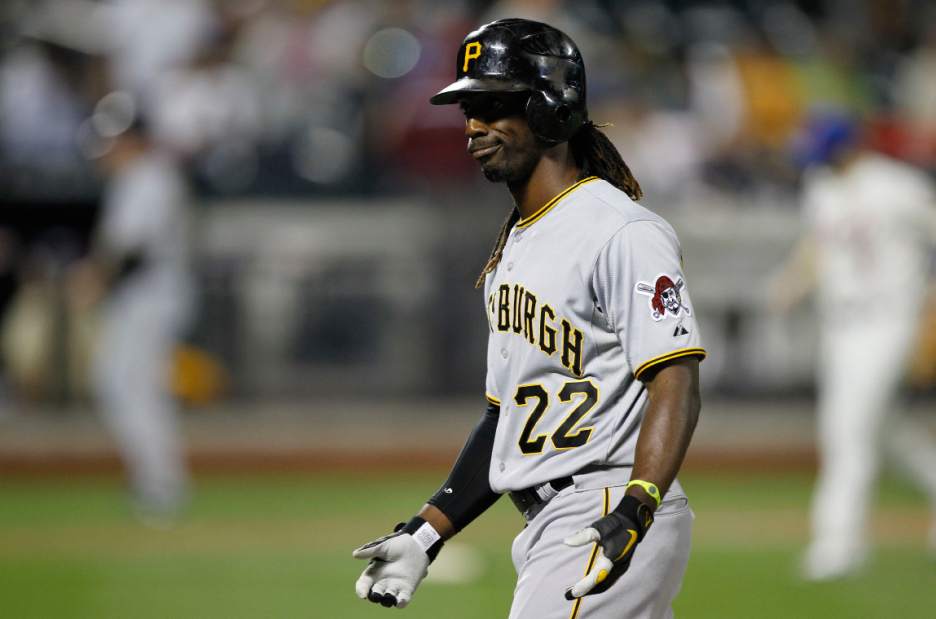
I’ll never forget Andrew McCutchen’s first triple as a Pittsburgh Pirate. There was nothing graceful about it. His helmet flew off as he dug around the bases, launching forward with each stride, as if each time trying to break through a wall. He slid safely into third, and as I watched, mouth agape, I wondered how long the Pirates could possibly keep this phenom under wraps.

That June of 2009, Pittsburgh was anything but close to playoff contention, and I was convinced our all-star centerfielder had arrived too early. The Yankees or some other deep-pocketed franchise would snatch him up before the Pirates even had a chance to sniff a wild-card berth. There was just no way a small market, two-decades-long loser could keep this kind of talent a secret. Andrew McCutchen was a superstar in the waiting, and Pittsburgh was where eventual superstars were reared. The New York harvest would surely come soon.

Three years later, and McCutchen is no secret anymore. Yet he’s still with the Pirates, and this season has propelled the team into first place. You probably know the stats by now: 1.063 OPS, 22 home runs, 66 RBIs, 14 stolen bases, and a league-leading .370 average. The 25-year-old leads the Pirates in every major hitting category. He stalks the outfield, covering so much ground that at times it seems impossible for opposing batters to get a ball to drop. He’s had an MVP-caliber season so far, and even so, I assure you the stats tell just a small part of the story. 
 
It’s been a long time since Pittsburgh had a star baseball player who was proud to wear the Pirate P. Jason Kendall quickly turned bitter. Brian Giles seemed to play for himself. Jason Bay always had his metaphorical bags packed. I rooted for these guys anyway — we all did — because they were all that Pittsburgh had at the time. So it wasn’t until 2009, when McCutchen hit his first triple, that I learned what a truly great Pittsburgh baseball player looks like. It was a different feeling. The picturesque backdrop of PNC Park glimmered. The skyscrapers seemed to grow even taller. I couldn’t help but think that the arches of the Clemente Bridge were grinning with pride. Andrew McCutchen was here to save a fan base accustomed to of the monotony of losing.

Even more so now than in those early days, McCutchen’s fervent passion for Pittsburgh is apparent. Watch him when the Pirates lose: It’s as if he’s singlehandedly let down the entire metropolitan area. He’s accepted the pressure of the city, and channeled that into each moment on the field. The MVP chants that rain down during each plate appearance are, to him, merely affirmation that his present at-bat is just as vital as the next. For him, for the Pirates, and for Pittsburgh. 
 
It’s been 20 years since the Pirates made the playoffs, far before I can remember. So I have to leave it to my imagination. And when I try to imagine what a playoff game might feel like in Pittsburgh, I think of an excerpt from Frank Ohara’s “Steps": 
the Pittsburgh Pirates shout because they won
and in a sense we're all winning
we're alive 
Thanks to Andrew McCutchen, baseball in Pittsburgh has been reenergized. He’s reminded us what it feels like to watch a great baseball player make a diving catch, line a triple off the Clemente wall, and smack a homer into a bleacher full of rejoicing, eye-patched Pittsburghers. Thank you Andrew, for reminding us that we’re all winning in the Steel City. That we’re alive.

Michael Bennett is a Began in '96's Pittsburgh correspondent.
Read more »

Meet the Marlins: Baseball's loudest, brightest and most ambitious three-ring circus

April 17, 2012 0 comments

By Adam Cancryn


The Marlins aspire to be their city's cultural icon, but must first concentrate on winning a few games.

This is not the start that they had in mind.

The Miami Marlins' inaugural season was supposed to be a season-long Carnivale, the start of a new era not just for the Marlins, but for the city as a whole. The downtown stadium would be Miami's new hotspot: a pulsating mashup of Pitbull and pelota, a place where thousands come to party, swaying in step with a new brand of baseball build on speed, flash and flamboyance.

From the fluorescent logo to the garish green stadium walls and the monstrosity in center, the message was clear. This wasn't your traditional American baseball, with its pre-packaged reverence for tradition and forefathers, sponsored by Chevy and backed by a stirring Toby Keith anthem. This was beisbol, a celebration of Latin culture played nine innings at a time for a city that identifies with the Hanleys and Joses far more than the Marks and Johns. "The Miami Marlins are the team of the people. Of our people," is the image that the franchise created for itself.

The problem with any image, though, is that it shatters without substance to support it. And for all its attempts at establishing its Latin identity, it took little time for the Marlins' carefully crafted campaign to fall apart.

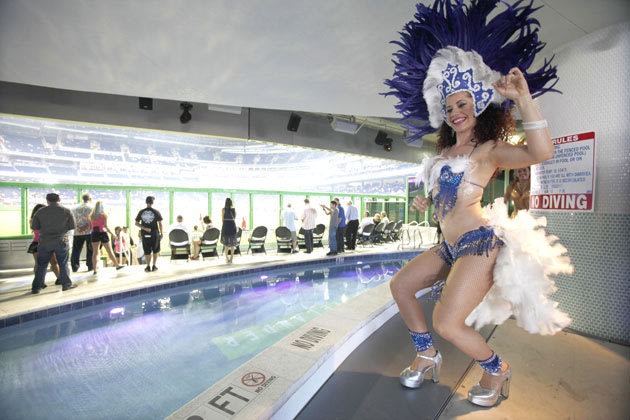
The team's Opening Night ceremonies involved trotting out women wearing what seemed like traditional Carnivale garb to escort the players onto the field. Unfortunately, the skimpy costumes skewed a bit too far toward the escort side of things, making the Marlins' first attempt at celebrating Miami's culture look like a hamfisted stereotyping dreamt up by a group of old white men.

The encore proved even more cringeworthy. In a decision that surely sounded far better in theory than execution (a theme that developed throughout the team's first weeks), the Marlins wheeled out Muhammad Ali for the first pitch. Rather than serving as a tribute to one of his great boxing victories, Ali's appearance only managed to remind those watching of their own mortality.

Ravaged by Parkinson's Disease and barely in control of his movements, the former world champion trudged across the outfield on the back of a golf cart as initial cheers gave way to an awkward murmur. Marlins owner Jeffrey Loria sat beside Ali, giving him patronizing pats on the knee and looking for all the world like the worst person in Miami.

The Marlins had envisioned Opening Night as a vibrant beginning. Before the first pitch, it was an exploitative failure.

***

Still, there was baseball to play. All was not lost, the party could be saved. If only Jose Reyes made a slick play in the hole, or Hanley Ramirez hit his first big fly, the place would crank right back up again.

But those plays never came. The oppressive Miami heat swallowed up the Marlins' offense. The opposing Cardinals, playing as if they were the ones this expansive park was made for, dinked and dunked their way to a 4-1 win.

For the Marlins, the night's enduring, and perhaps most appropriate image: Young star Giancarlo Stanton after smashing a pitch to left center, all his might and effort put into one big swing, following the ball's arc until it landed with a thud in the outfielder's glove, well short of the wall.

***

Since that first night, little has gone right and nothing has gone as perfectly as the Marlins envisioned. On the field, the team has struggled. Ace Josh Johnson has been ineffective in two starts. Reyes, the $100 million spark plug, is hitting just .238. Stanton and first basemen Gaby Sanchez have yet to leave the yard.

Worse yet, the baseball revolution that the Marlins promised their city — MARLINSANITY, the hyperbolic Sports Illustrated cover blared — was dead on arrival. Their play was no more daring, no more entertaining, and certainly no more successful than the baseball you might see in Kansas City or Minnesota or Cleveland on a given night. Attendance is up compared with previous years; it's hard not to improve on the worst figures in baseball. But the Marlins are hardly the brightest spot on the beach. They're simply a baseball team.

Or at least it was, until Ozzie Guillen did what he does worst. The unfiltered manager made comments that were interpreted by some as favorable toward Cuban dictator Fidel Castro, a major no-no in an area dominated by the country's refugees. The firestorm, stoked first by the media and then by politicians eager to score points, escalated to levels of outrage (both real and fake) previously reserved for the daytime cable news shows. A week into the season, Guillen was on the hot seat. CBS Sports' Jon Heyman, normally as reserved a reporter as they come, predicted the fury would cost Guillen his job. For this news cycle at least, the Marlins had become more a political puppet than a sports franchise.

Guillen wasn't ousted. In a practice that has become necessary to win America's forgiveness, the manager called a press conference to formally apologize. He delivered a tearful mea culpa, the crowd administered the requisite public shaming, and the Marlins suspended Guillen five games. Everyone went home unhappy but feeling better about their respective positions on the matter.

***

Guillen returns to the bench this Tuesday, to a 4-6 team sitting last in what has become one of the league's best divisions. It's not the start that the Marlins had in mind, but it's the one they must live with. Dream teams can take time to hit their stride, just ask that basketball team across the way. And after weathering a season's worth of bad news within the just first two weeks, odds are that things are looking up. Infielder Omar Infante has been a bright spot. Josh Johnson identified and fixed a flaw in his mechanics. There are still 152 more games to go.

Plus, when Hanley Ramirez crushed his first home run over the lime green walls and into the seats, you had to admit that that center field monstrosity — that symbol of Marlins beisbol — looked pretty cool in action.

Adam Cancryn is an editor and co-founder of Began in '96.

Read more »

Wage wars: How the MLB's middle market changed the game

April 5, 2012 0 comments

By Adam Cancryn


A new group of teams have pushed their way into the MLB's upper ranks by handing out outrageous contracts.

At 10 years and $225 million, Joey Votto is the latest in a string of MLB players joining the ranks of the mega-rich this offseason.

This year's class is a distinguished bunch. Albert Pujols (10yrs/$240M) and Prince Fielder (9yrs/$214M) were due for a big payday, while Matt Cain (6yrs/127.5M) and C.J. Wilson (5yrs/$77.5M) cashed in on their consistency over the past few years. Lost in the flurry of the recent eye-popping numbers are the sizable deals signed earlier in the year by players like Jose Reyes (6yrs/$106M) and Yu Darvish (6yrs/$56M plus a record $51.7M for negotiating rights).

However, this group is notable not just for their on-field accomplishments, but for the seeming ease with which they secured the kind of long-term, double and triple-digit contracts previously reserved for game's most elite players. Since Alex Rodriguez broke the $200 million barrier in 2000 and became baseball's new financial barometer, payouts had arranged themselves into a logical, top-down system. This offseason has upended that, and touched off the MLB's latest wave of wage inflation.

Baseball has undergone this kind of chaotic correction before. Usually, there's a single driver behind a coordinated jump in salaries: the advent of free agency, or the increasing use of arbitration, or the Yankees deciding they just had to have a player. But until now, those jumps obeyed a few rules:
  1. The teams with the most money set the new bar.
  2. Only the very best (say, the top three) players can force a team to radically move that bar.
  3. When that bar does move, it's because the richest team and the best players have decided to join forces.
But this year has altered those generally accepted principles. The Yankees, Mets, Red Sox and Cubs largely shied away from the big-ticket signings, due to either a lack of need or financial means. Outside of Pujols, none of the signees are among the top five players in the league (Fielder is arguable, but has never finished in the top 10 in Wins Above Replacement). As a result, the matches that were made this offseason were not necessarily indicative of a wage-shifting year.

Nevertheless, there was the money. All those piles of money. To Pujols, Fielder and Votto, $200 million plus. The No. 2 pitcher on a team full of aces got $127.5 million, while the lefty with just two years experience as a starting pitcher got $77.5 million. A shortstop with balky wheels? $106 million. And don't forget $107.7 million total for the import with no MLB experience, despite history pointing to Japanese pitchers' struggles in the big leagues.

The middle to upper-middle market teams took over the offseason, and most wielded their newfound power by signing great but not best-of-the-best players to ridiculously long and expensive contracts.

The reaction among fans has been predictable, and no doubt even the Yankees and Red Sox shook their heads at the idea of paying Votto $25 million in 2023 or committing to a 10-year, $10 million personal services contract for Pujols after his original 10-year, $240 million deal expires. But baseball, of all sports, favors the bold, the front office willing to gamble big to win even bigger. And at least in this case, there are some indications that these big contracts are educated gambles.

By handing out exorbitant contracts now, these teams are betting that a few things will happen in the future. The first, as originally outlined by Fangraphs, is that they'll be able to secure a lucrative television contract at some point down the road. The Angels' deal with FOX allowed them to start spending big in the first place, and the Yankees and Mets, among others, have profited from their media arrangements for years. The price companies are willing to pay for exclusive game rights is climbing, and as News Corp. and other newer players commit more resources to the medium, the exclusivity price tag could skyrocket. Sign that kind of lucrative deal, and payroll instantly expands, allowing a team to absorb whatever multimillion-dollar promises they've made.

Apart from getting outside financial help, these teams are buying into the concept of a first-mover advantage. Decades-long, $200 million contracts as the new normal for elite players is shocking now, but baseball has shown a willingness to quickly recalibrate its standards. Just as $100 million contracts have become routine over the past decade, it's conceivable that $200 million could become the new benchmark over the next few years. By the time Votto or Pujols reach the final years of their deals, the money could be right in line with what others of their caliber are paid. As far as Reyes, Cain and the others, they could prove to be downright steals. In any business, there are often disconnects and inefficiencies that can be exploited by being the first to act. These teams were willing to endure some criticism on the front end for the potential payoff down the line.

Of course, each of these teams all face some sort of pressure to generate that payoff sooner than later. The Angels are nouveau rich; a decade ago they ranked 16th in payroll, last year they were fourth. With that money comes the expectation of star players and championship trophies.

The Tigers have always had the talent to stay near the top of the league, but lacked that one difference maker. Each year they've fallen short has been another prime opportunity wasted. The Reds are similar in that expectations have often gone unfulfilled. Locking up Votto is the first step toward fulfilling that promise.

The Rangers and Giants, meanwhile, are supposed to contend for the World Series again, while the Marlins need to draw fans to their brand new ballpark. Both goals require star power.

Facing those kind of pressures, general managers are more likely to pull the trigger on a large deal, in hopes the early returns outstrip the overall costs. It's the kind of decision that can elevate a franchise or send it into a spiral, secure one's place in history or ensure one's firing.

This offseason has been a generation-defining one for these five teams. Whether the results are spectacular, or spectacularly bad has yet to be determined, but either way, they are already responsible for the latest to shift in way that baseball does business.

Adam Cancryn in an editor and co-founder of Began in '96.
Read more »

Wilpon and Katz: Too lucky to fail

March 22, 2012 0 comments

By Adam Cancryn


The Mets' owners settled their Madoff case, ensuring they'll be around to ruin the team for years to come.

In the end, everybody won. Except, of course, for Mets fans.

After months of debate between the Wilpon family and trustee Irving Picard over whether the Mets' owners were willing participants or just horrendously naive in buying into Bernard Madoff's Ponzi scheme, the two sides reached an agreement: Horrendously naive it was.

In a settlement announced March 19, Fred Wilpon and brother-in-law Saul Katz consented to paying $162 million of "fictitious profits," slightly more than half the maximum amount they stood to lose had the case gone to trial. Even better for them, there's little chance the two will ever have to shell out even a fraction of that total. In exchange for forfeiting their claim as victims of the Ponzi scheme (Wilpon and Katz contended that Madoff cheated them out of $178 million), Picard agreed to first try to recover that $162 million from others that he is suing in connection with the fraud. Only if he cannot claw that amount back over the next three years will the Mets' owners have to pay a cent of the penalty. And if they do have to pay some part of it? They can do it in installments.

The settlement has the strange effect of putting Wilpon and Katz and Picard on the same team. Both parties now have a vested interest in recovering the $162 million, if for vastly different reasons. The Mets' owners simply want to escape any punishment for their bumbling ineptitude, while Picard just wants to get the real victims their money, no matter where it comes from.

And so everyone emerged from the Manhattan courthouse that morning with a smile, while Mets fans the world over shook their heads in disbelief. These two stooges, who treated a baseball team like a personal investment vehicle, who gave the keys to that vehicle to the nation's largest fraudster, who sunk the team into incredible debt and then gutted it to save themselves — these same two stooges simply waltzed away from the only situation that could have forced them to end their abusive marriage to the Mets.

Image via Mets Journal
Now, as the Wilpon family's troubles end, the Mets' problems are ramping up. The settlement means that Wilpon and Katz will not have to sell the franchise to cover their fines, allowing them to return to running a team that they drove into the ground a couple of years ago and have left, smoldering, by the side of the road since then. Even if the team's owners no longer face dire financial straits, the Mets themselves will for years to come.

The franchise lost $120 million over the past two years despite playing in the nation's biggest and best market. That deficit forced the Mets to cut their payroll by about $52 million this offseason, the greatest year-over-year drop in MLB history. To tide over their day-to-day operations in 2011, the team took out multiple loans, including a $40 million advance from Bank of America and a $25 million one from Major League Baseball.

To pay back those loans, the Mets turned around and begged other people for money, this time in the form of minority investments. They did find enough investors to purchase 12 stakes worth $240 million total, even if at least half of those were purchased by Wilpon, Katz or the Wilpon-owned company SNY. In financial terms, the cash-strapped team borrowed money from both a bailed-out bank and a sympathetic regulator, then turned around and paid off those loans using funds partially provided by that same team's cash-strapped owner. In simpler terms, the Mets are their own self-contained financial crisis.

Just like any fiscal meltdown, these issues will cripple the franchise long into the future. Even after much of the $240 million was whisked off to various creditors, the Mets still needed to cover part of the $430 million in debt it took out with JP Morgan. Only after that can it begin thinking about funding its current-year obligations, of which Capital New York's Howard Megdal chronicled on March 20:

The owners will have to make a pair of payments on Citi Field — those payments totaled $43.7 million last year. They'll have $20 million in interest on the $450 million debt against SNY due in 2015, plus $30 million in interest on the $430 million debt against the Mets. If we assume that's been knocked down by a quarter, or even a third — those three obligations still total right around $75 million.
All those payouts, he adds, would only bring the Mets up to speed for this year. Massive operating losses for a third consecutive year would plunge the team right back into unsustainable debt. Given the lower ticket prices and dismal attendance predictions, it's a good bet we could be right back here at this same time next year, especially if the Mets fail to sell off their only two remaining stars, David Wright and Johan Santana.

That crushing financial burden is the Wilpon family's legacy when it comes to the Mets. Or at least, it would be, if they had been forced to sell the team. A sale would not have wiped the slate clean, but at least the new owner would have had ample personal funds to inject into the team. He or she could stabilize its finances, and still have the cash to put toward the building of a competitive baseball team, the concept of which seems to have been lost in this entire mess.

But Wilpon and Katz escaped from that Manhattan courthouse with just enough money and an abundance of arrogance to continue this sad charade.

"I can't wait to get back to our businesses, which I love, and the first order of business, the first priority, is getting down to Florida tomorrow, getting to that spring training camp and bringing the Mets back to the prominence our fans deserve," Wilpon said following the settlement, according to The New York Times.

That's a popular refrain, Wilpon saying that he loves the New York Mets. But there's a major difference between loving a team and loving having ownership of a team. If an owner whose mistakes have left the team financially broken, culturally depressed and devoid of talent can't bring himself to step down for the good of the franchise, then it's not hard to see on which side he falls.

Adam Cancryn is an editor and co-founder of Began in '96, and likely has a better credit score than Fred Wilpon.

Read more »

Offseason on the brink

March 1, 2012 0 comments

By Jason Bacaj

A disappointing, yet constructive year has led into a make-or-break offseason for the Washington Redskins.

The offseason is the best time to be a Redskins fan. There are no more games to be lost. No more cringing when the offensive linemen get into their pass sets. No more convincing yourself that LaRon Landry is an elite defender. No more watching the game on a bootleg Spanish-language broadcast because I live in Montana now.

But this offseason is a little more special than a typical Redskins offseason. They're close to being a team. After last year's 3-1 start, and before the injury bug bit, I believed the 'Skins were a 10-win squad. I was even able to convince a few friends of that too. And this offseason they have an opportunity to make a significant leap forward as a team, by either building up through free agency and the draft, or trading it all to the St. Louis Rams for a chance grab Baylor quarterback Robert Griffin III. I'm so excited about it that I'm wearing my Super Bowl XXII Champions shirt while writing this.

However, to fully grasp the significance of where the Redskins are right now, we have to rehash where the Redskins have been during the Daniel Snyder era.

As soon as Snyder bought the team in 1999, following Jack Kent Cooke's death, he signed Vinny Cerrato to run personnel matters. The two then went on a spending spree. Jeff George, Deion Sanders, Bruce Smith, Mark Carrier and Adrian Murrell were among their first signings. Shortly afterward, 1998 Redskins starting quarterback Brad Johnson signed with the Buccaneers and won the Super Bowl in 2002. From there, Redskins fans found the team caught in a pattern of giving up draft picks to overpay veterans. In 2003, they gave the Jets a first-round pick for Laveranues Coles. Washington had just three picks in that draft. Then there were the signings of linebacker Jessie Armstead, defensive end Jason Taylor, safety Adam Archuleta, wide receiver Brandon Lloyd (bombed with the 'Skins, killed with the Broncos afterward), Antwaan Randle El and tight end Christian Fauria. Last, but certainly not least, was the $100 million Albert Haynesworth debacle.

Then there was the coaching carousel. The Redskins went from Norv Turner to Terry Robiskie to Marty Schottenheimer to Steve Spurrier to Joe Gibbs to Jim Zorn to Mike Shanahan. Only Schottenheimer finished his Redskins tenure with a record of .500 or better. His record was 8-8.

Cerrato resigned in Week 14 of the 2009 season and shortly after, Washington hired Bruce Allen as its general manager. Shanahan signed in January 2010 and sparked a era of hope, though that was mostly because Snyder agreed to take a hands-off approach to the team after a solid decade of futility.

Looking at that 13-year history gives you an understanding of the precipice on which this Redskins offseason rests. I am living in constant fear that Snyder will put pressure on Shanahan and Allen to win now, and they'll implode the team once more trying to do so. But their Redskins track record leads me to give them the benefit of the doubt heading into free agency and the draft. I've blacked out both the 2010 offseason and season in taking this perspective, by the way.

For the first time in my memory, the Redskins have followed a well-defined and defensible rebuilding process. The last offseason was spent building through the draft and making nuanced free agent signings. Washington picked up defensive linemen Stephen Bowen and Barry Cofield and drafted nose tackle Chris Neild (WVU!), defensive end Jarvis Jenkins and college DE Ryan Kerrigan. Those moves drastically improved the defensive line, even considering that Jenkins blew out his knee in a preseason game and never played a down. 

Signing running back Tim Hightower and drafting running backs Roy Helu and Evan Royster gave the Redskins a legitimate rushing attack when the line was healthy. Rookie Leonard Hankerson showed signs of being of a starting caliber after shaking the dropsies but before suffering a season-ending injury. Free agent acquisition Jabar Gaffney showed he's a quality possession receiver. Washington also joined a scouting co-operative called BLESTO, named for the founding members (Bears-Lions-Eagles-Steelers Talent Organization), as fellow Washington & Lee graduate and Washington Times writer Rich Campbell reported.

If you squint just right, you can see a team structure forming.

There was a clear focus on the defensive line. Surprisingly enough, the defense improved to point where they were a quality defense. Defensive end Adam Carriker noted in an interview last Thursday that he thought the Redskins had a top-10 defense, for the most part. The team as a whole was improved as well, evidenced by to a 3-1 start and the team cracking the top 10 in many publications' league power rankings. It was only when the team was beset by injuries that everything started to fall apart.

There's a distinct chance now that the Redskins can pull off two consecutive offseasons of competence, though that chance is accompanied by the opportunity to fall apart in spectacularly heartbreaking fashion. 

Signs as to which way the offseason will fall are mixed. The 'Skins re-signed center/guard Will Montgomery, who plays a key role on the offensive line. It's a sign that this year the focus will be on the offensive line, which makes sense given the focus on the defensive line last offseason.

Signing Montgomery takes the 'Skins out of the running for Houston Texans' free agent center Chris Myers. But it leaves them open to pursue Ravens guard Ben Grubbs or the Saints' 26-year-old All-Pro guard Carl Nicks and an as-yet-to-be-identified target at right tackle. Maybe they can even add a wide receiver as well. Whether Washington has the cap room to pick any of those guys up and re-sign free agent starters like linebacker London Fletcher, running back Tim Hightower, Carriker and also back-up guard Sean Locklear remains to be seen.

Regardless of what happens in free agency, I believe the Redskins will trade for the draft's second pick and take RGIII. After watching him perform at the combine, I'm all in on the move. He's an elite talent, has a track record of success and has what appears to be an extremely stable personal life, all of which points toward the positive. 

The 2012 offseason will determine the course of the Redskins franchise for at least the next five years. Their success hinges upon how they balance team building with the need to win. Thinking about it gives me the same feeling as standing atop a cliff you've never hucked before, wondering how it'll go.

All you can do is drop in and find out.

Click here for the full interview with defensive end Adam Carriker:
Download this episode (right click and save)

Jason Bacaj is Began in '96's Out West correspondent and an abundantly optimistic Redskins fan.


Read more »
Related Posts Plugin for WordPress, Blogger...

About the site

Began in '96 features perspectives on sports and their place in the wider world. Each piece aims to move beyond easy cynicism or blind reverence and instead deliver thoughtful and incisive viewpoints that drive the conversation forward.
There are four regular contributors to the site, and comments, questions and corrections can be sent here. Follow Began in '96 on Twitter here.