Content

Showing posts with label Jason Bacaj. Show all posts

2012's Best: RGIII and the Redskins' resurrection

January 9, 2013 2 comments
Via USA Today
By Jason Bacaj

It was only one season, but boy, what a season. The RGIII-led Redskins engineered the turnaround of the year and surged into the playoffs. Part of a short series on the best moments of 2012.

I wish I had a picture of the faces on all the people at my house when the Redskins won the NFC East. I wish I could take that feeling, bottle it up and take a sip any time I’m feeling down. I’d keep a little vial of it around my neck so emergency personnel could inject it directly into my aorta and bring me back to life, if need be.

Watching the Redskins capture the division for the third time in my life while surrounded by Dallas fans was glorious and amazing and easily one of the best sports moments of 2012. And because I can’t help but gloat a little bit more… to all the Cowboys fans still clinging to that “America’s Team” moniker: Child, please. You must not have seen this. Forget America’s Team, Robert Griffin III is America’s quarterback.

This year marked the complete turnaround of an NFL franchise that had seen so little success for so long. The Redskins went from worst to first, and while a significant portion of the credit goes to our Black Jesus under center, more encouraging was that much of what the team built over the past two years started to pay off.

The decrepit roster with a losing mentality was broken down and rebuilt, better piece by better piece. Head coach Mike Shanahan has cut 150 players since he came in, and only one (Carlos Rogers) is starting for another team. Over the course of those two years, the Redskins grew up right before our eyes.

Or at least my eyes, since it seems no one else has given them a chance since the late 1990s. I’m looking at you, ESPN the Magazine, with your 2-14 preseason prediction. And you, Pete Prisco of CBSSports.com, with your 3-13 prediction. Despite key early-season injuries and a dreadful 3-6 start, Washington refused to fold where it certainly would have in the past. Then suddenly they were owners of a seven-game winning streak, a division title, and a home playoff game.

Who knows what will happen next year. Offensive coordinator Kyle Shanahan appears interested in a head coaching gig (Don’t do it, Kyle! There’s a succesion plan in place and RGIII is your play-calling muse), the team will lose out on another $18 million in cap space and it’s already without a first round draft pick.* Not to mention Griffin’s wobbly knee, which swayed and then collapsed on the torn-up FedEx Field turf, dragging D.C.’s playoff dreams with it.

Even so, what happened this season was glorious. The pack-it-in attitude is gone. In its place is a franchise quarterback, a talented running back, and the kind of skill at each position that comes from a multiyear dedication to rebuilding. We’ve seen one of the finest franchise turnarounds in recent memory, and I can only hope that this year lives up to the new standard that the Redskins set in 2012.

Jason Bacaj is Began in '96's Out West correspondent and an appropriately optimistic Redskins fan.

*Article amended to reflect that the 'Skins do indeed have a second round draft pick. Hooray!
Read more »

"I am filled with impotent rage": Portrait of a Redskins fan's mind in 25 expletive-laden scenes

September 24, 2012 1 comments
via CincyJungle.com
By Jason Bacaj

An unfiltered, real-time glimpse into the mind of a Redskins fan during the team's bizarre and crushing loss to the Cincinnati Bengals.

It's not every season that fans get to watch a franchise's rebirth.

This year, we're being treated to an amazing one with the Washington Redskins. I'm wholly biased, but that doesn't make it untrue. If one thing is clear, the team isn't a turd sandwich held together by cracked toothpicks anymore. It's a team with focus and potential. They're great to watch, and the new era has brought the fan base together even tighter than before. "It's real this time," we tell each other through earnest, shining eyes. We're watching every second and basking in it.

Unfortunately, the rebirth of a team is frustratingly slow and frequently painful, and as Redskins fans we're wired to believe that all of the franchise's promise could disappear tomorrow. But in the meantime, everyone should be allowed to enjoy the show, and so I'm offering you a firsthand look at my life through a text message conversation held during yesterday's Redskins-Bengals game. 

A little background: My friend and fellow fan David Sternlicht had to miss Sunday's home opener against the Bengals for "family time," and so I provided him with the best play-by-play I could via text. 

The conversation (lightly edited to protect the innocent) began after Mohamed Sanu hit A.J. Green for a 73-yard touchdown pass on the first play from scrimmage. Redskins running back Alfred Morris ripped off a nice run to start the Redskins' first drive, and then on Morris' carry the next play...


I was too furious and confused to type after that. Without hearing the announcers' explanation, I have no idea what exactly happened. There was a sack, false start, the Bengals ran on the field, the Bengals ran off the field, and next thing you know it was third and 50 from the opposite 40-something. The Redskins had the ball on the 19 going in a couple plays before. I still have no words to describe what happened. The Washington Post took a shot at dissecting the last 10 seconds, but there are still a number of question marks.

I'm hoping for a quick return to the brilliance we saw week one, but I'm not holding out hope. That week featured a team that was daring, beautiful and made me feel dangerous and safe at the same time. But it was also horribly cruel and misleading if the last two games signal a return to the typical Redskins heartbreak, one that would be magnified this year by the long-awaited presence of a star quarterback like RGIII (and the unfortunate presence of those damn replacement refs). All the same elements are there: crucial injuries, missed tackles, poor line play and mental lapses on both the players' and coaches' part.

That said, I'd like to point out that RGIII has led the team on potential last-second, game-winning drives in the last two games. Both were ruined by penalties and poor refereeing. But it appears we finally have a player that thrives during those moments. Warms the heart. Anyway, I hope you enjoyed your glimpse into the rebirth of a franchise and all the joyous pain that goes with it.

Jason Bacaj is Began in '96's Out West correspondent and an abundantly optimistic Redskins fan.
Read more »

Leaving the game

June 5, 2012 0 comments

By Jason Bacaj

Reflections on loving, and leaving, the game of football.

As I sprinted down the sideline toward the south end zone, I found myself all alone.

I’d already smoked the linebacker trying to cover my wheel route, and as I reached the 15, the quarterback let it go. The pass was behind me, but I managed to twist around and grab it right as I hit the three-yard line. A step later, my right cleat caught the turf and jarred me to the ground. The back of my head hit first, knocking me out.

I came to seconds later, in time to see the referee signaling incomplete. I got up, shook it off and peered toward the sideline for the next play. But everything was blurry, and I couldn’t make out what the coaches were doing or saying. My contact lenses must have gotten knocked out, I thought. I trotted over to the bench, feeling for them on my face. And that’s where my memory ends.

The game film showed me getting the formation from a coach, lining up and firing out into the play, after which I slowly walked to the middle of the field and turned around. We all laughed about it in the film room later that week.

I finished the game, and apparently even made a great downfield block that took out two defenders and played a major role in me grading out higher than any other tight end that game. But after that wheel route, I still don’t remember anything that happened.

This was my sophomore year at Washington and Lee University. It was the fall of 2007, before concussions and their dangers took center stage in the football world. It wasn’t my first concussion and it wasn’t my last, and at the time it was still just a funny injury. But concussions had become a serious issue by my senior year, and after suffering another, more serious one during an intra-squad scrimmage, my football career was effectively over.

Looking back now, stories like those of Junior Seau, David Duerson and Derek Boogard scare me. I think about my time on the field, and I wonder what might happen to me. Sure, the three of them were professional athletes who spent substantial careers hurling themselves against men much larger than my Division III opponents. But does that mean I’m safe? At what point, and at what level, does Chronic Traumatic Encephalopathy set in? No one knows.

No one knows much about anything until after the athletes die, at which point it’s hard to glean anything definitive about why they chose to kill themselves. The popular hypothesis is that the players weren’t prepared for life after football. It’s a hard thing to adjust to, and something I faced when, mercifully, I realized there was no way I would make it to the NFL as a 6’1”, 210-pound tight end.

Staring at the end of my football career in 2008, I decided to call one of my old high school football coaches, Jeff. Maybe I could learn something of my future from his past.

After talking to him, I wrote about the difficulties of adjusting to life after football, and the man who was able to handle those challenges well. A few years later, I hope I have, too.

***

When I called around for this story, I got a few answering machines and had a few frustrating days where I did next to nothing. More than a few of those, actually. But I suppose that’s what you get when you're trying to learn something about your future from someone else's past. Those few moments of self-reflection in between phone calls were fitting, even if I didn't understand why at the time. Finally, though, that distinctive voice reached my ear, saying, “Oh yeah, I got your message last night, what's this you’re doing?” Things were “booming, just booming,” back in Morgantown. Construction was going well, the town was growing, his son was having fun at football practice.

It was my old coach Jeff. I’d called him to see how he had dealt with leaving football. My own career is ending soon, and I wanted to see what it was like for him to leave the game he loved, the game he grew up with. The game he, like so many other people, watched with his older brothers, cheering on the Steelers and Chiefs during the first half and then going out and playing the second half in the backyard.

Jeff played football with his brothers until seventh grade, when he took his game to the gridiron. The season lasted just two games, but it must have been a great two games, because he never returned to the backyard.
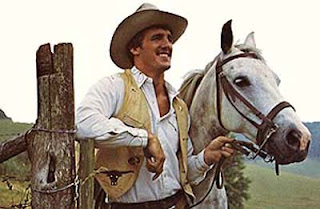
Jeff went on to play high school football, along with a couple other sports, at a small single-A school in southwestern Pennsylvania. There were so few single-A schools that they had to play up a division, and Jeff got to play organized ball with his younger brother for three years.

"Just being able to play with him," he said. "That was great."

Funny story about that: When he was a junior, Jeff started at quarterback. When he was a senior, the team didn’t have a tailback, so Jeff moved there and his brother played quarterback. He was a Parade All-America at linebacker that year and got recruited by Division-1 schools like Stanford, Notre Dame and Penn State.

But Jeff’s recruiting experience wasn’t really about the football. He was a Mennonite farm boy from Pennsylvania, and this was the first time he had the chance to travel around the United States. He visited Stanford to see the sun set in the Pacific. He saw Notre Dame in the Midwest, mainly because they were playing UCLA, his favorite basketball team at the time. When it came time to choose, Jeff ended up staying close to family, close to those who first introduced him to the game. He went to play for Joe Paterno and the Penn State Nittany Lions, the same place that his two older brothers went.

Football became a year-round thing for the first time in his life. In high school, Jeff said he’d prepare maybe a few months before the season began. But in college, training began a month after the last season ended. He ended up transferring to West Virginia University, a little closer to his southwestern Pennsylvania roots, where he got the opportunity to play quarterback.

Jeff played all right in those two seasons, leading the Mountaineers to victory over the ninth-ranked Oklahoma Sooners in his first game as the starter. His biggest challenge was keeping up on schoolwork amid all the expectations and commitment.

"You really had to make sure you used your time extremely efficiently," Jeff said. It's tough on a young man coming from a high school, where you played with your little brother and your friends, to a college where "you’re a medium fish in a tank full of big fish." Even when you made the team, when you solidified your position, there was always someone breathing down your neck.

"Playin' in front of 60,000, 70,000, 80,000 people and being judged, with your self-worth attached to how well you played," Jeff said. "As a young man … you had to figure out ways to convince yourself that that wasn't the case."

It helped that everyone on the team was supportive. Like a big family, they all looked out for one other. Everybody got along with everybody else, and eventually, they were like brothers.

Jeff played well enough at WVU to get invited to a combine. There were two at the time. He was paraded in front of everybody in his gray NFL shorts, shuffled through like a piece of meat. It was a process different from anything he'd ever experienced, but by the end, he’d done all right. Experts projected that the first quarterback selected would either be him or Boomer Esiason. Jeff ended up getting taken after Esiason, by the Giants, with the second pick of the third round.

"It's real frustrating," he said of the lead-up to the draft. "You just want to get drafted and move on to the next step in the process."

Jeff realized pretty quickly that the NFL was a lot different from college. There's no security in the pros, you weren't just competing for a position. You were competing for a job, a livelihood. There are bigger, faster, younger players coming into the league each year.

For Jeff, the toughest part was the mental aspect. There wasn't any schoolwork to distract you from the game; you were either in season, training to get in shape for the season, or in mini-camps and training camp preparing for the season as a team. And it was when that year-round season mentality began to take a physical toll that Jeff knew it was time to step back. His body couldn’t recover from the last season before the next one began. Then, his mental desire began to slip. And when you aren't prepared for the NFL, he said, you cheat everybody involved. The guy who grew up playing with his brothers and looking after his college teammates wasn't going to cheat his extended NFL family. So Jeff stepped away.

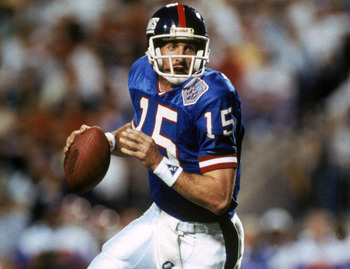
Jeff's last name is Hostetler. It's okay if you don't recognize it. Few, if any, of my friends in college do. They only know him by what I tell them, from the stories about my old coach. That old guy, who still has an NFL build, who challenged 17-year-olds and 18-year-olds to races and throwing contests and won all of them. The guy who called me slow, who threw footballs at my helmet while I tried, fruitlessly, to pick it up before practice. The guy huddling us up before the half to draw up a two-minute drill in the palm of his hand (we scored).

They don't know about how he was a Parade All-America, about his spot on WVU's all-time roster, his place in NFL history, or how he led the New York Giants to a Super Bowl victory in 1990.

And that's what a football career should be: The past, a fun thing you were pretty good at back in the day, not your defining characteristic. It's just a game. Sure, it can be transcendent, but that's for people outside the game who don't know the camaraderie of the locker room. Because that's what you miss. Not the flashbulbs and the rings. They're great, but you remember that time you caught a snapping turtle before practice and almost put it in one of your teammate's helmet, or put an "I’m gay and proud" sign on Howie Long's license plate and watched him drive around Los Angeles without noticing.

Sometimes I wonder about how I would answer the question, Who are you? Without fail, one of the first things that comes to mind, after my name, is that I play football. I had hoped to talk with Jeff about how he dealt with losing that part of his life, that part that defined him for so long, too. But we got so caught up talking about different pranks and old stories that I didn't even have time to ask him that question.

Jeff's a busy man now, running a real estate development company called Three Arrows Development Inc. The name comes from a passage in the Book of Psalms about kids being a blessing like arrows to a warrior. Jeff has three sons, hence the name Three Arrows.

When I was interviewing him, he was at the airport going somewhere, on business or vacation, I didn't ask. But he had to go before he could answer me. Now, thinking back on the story he told me about his life and his experience with football, I don't think he had to. He left football because his body couldn't take the punishment any more. He left, but football didn't leave him, because he never let football define who he was. Playing was always a just a game. What defined him was something deeper. It was the family. It was a brotherhood that was with him from his first day in the backyard until the last time he shut his locker.

And I think if he had answered me, he probably would have just smiled and given me a stock line about how it's just a game. You can't really explain what it is, what it's like to leave it. It's personal, and the experiences and memories are to be treasured but not displayed. Much like Jeff's ubiquitous moustache, it's a part of you. People can see it, and you can't hide it. So you just smile, and tell them it's just a game.

Jason Bacaj is Began in '96's Out West contributor.
Read more »

At the end of a dark era, RGIII

March 14, 2012 1 comments

By Jason Bacaj

The Redskins gave up an unprecedented amount for Robert Griffin III, but it's worth it to reverse decades of offseason futility.

The Redskins have not had a franchise quarterback since Joe Theismann's eight-year run from 1978 to 1985. Doug Williams was a great talent and won the Super Bowl in 1987, but injuries limited him to three seasons with the team. Mark Rypien was not a franchise player either, though has a special place in my heart for being the only Redskins quarterback to win a Super Bowl in my lifetime. I was four years old at the time and the memories are somewhat hazy, but I relived them throughout my youth thanks to the Sports Illustrated Year in Sports: 1991, and then every day of my adulthood through the "Super Bowl Champions" poster tacked by my bedroom door.

Heath Shuler was the first quarterback I recall the Redskins drafting. He lasted two seasons and was the biggest bust in Redskins history and, along with Gus Frerotte's headbutt, qualified among the franchise's most significant setbacks. That is, until beloved owner and Canadian Jack Kent Cooke died in April 1997. Dan Snyder bought the team then, sold the naming rights to Jack Kent Cooke Stadium and, in a stunning feat of incompetency, hired coaches who gave the offensive reins to the likes of Tony Banks, Shane Matthews and Danny Wuerffel.

That history is why March 9, 2012, prompted the reaction it did among Redskins fans. And it is also why it caused the ensuing backlash.

The Redskins have made terrible offseason moves. This is not up for debate. The most recent was Albert Haynesworth and his $100 million contract, which contributed to the Redskins losing $36 million in cap space over this and the next offseason. But trading two future No. 1 picks and a 2012 second rounder to swap places with the Rams and potentially draft Robert Griffin III is not one of those moves.

Aside from being a highly-rated quarterback, he has nothing in common with Ryan Leaf, the draft bust to whom naysayers have drawn comparisons. The much-maligned Leaf was a 6'5" white guy from Montana with a partying reputation who showed up out of shape to his predraft workout with the Colts and was chided for being fat and out of shape by a San Diego Chargers teammate. 

Griffin is a 6'2" black guy from Texas who grew up in a military family, was senior class president in high school, finished a political science degree in three years, is on track to get a masters in communications this summer, qualified for the U.S. Olympic trials as a 400-meter hurdler, doesn't drink or smoke and is engaged. And he won the Heisman Trophy while bringing the Baylor University football team to national relevance for the first time in recent history.

A more accurate comparison is 2004 draftee Eli Manning. Manning was highly rated, had a stable personal life and was traded on draft day when the 4-12 New York Giants swapped '04 first-rounders and traded the Chargers an '04 third rounder and '05 first and fifth rounders. In turn, he led them to two Super Bowl championships.

We're entering a different era in the NFL. Rule changes have made the quarterback the most important position on the field by far. Each team that's played for the Super Bowl the past four years has had a franchise quarterback. Drew Brees broke the single-season passing yardage record, had a 71 percent completion rate and still didn't win the MVP. Three quarterbacks threw for more than 5,000 yards.

The Redskins need a franchise quarterback to compete in this type of league. They had a big rookie haul in the 2011 draft, with 11 of 12 picks sticking with the team and six of them making notable contributions. The Redskins were ranked 10th as late as Week 6 before injuries to the offensive line derailed the season. It's not a great team, but it's certainly not the helpless team some have made them out to be, and a quarterback could make all the difference. We've already seen that with the Colts, who finished 10-6 in 2010 with future Hall of Fame quarterback Peyton Manning and 2-14 last season without him. A franchise quarterback is worth whatever price a team has to pay, even if it's two future first rounders.

Robert Griffin III might not turn out to be a two-time Super Bowl MVP like Eli Manning. But of all the quarterbacks in the draft, the political science major nicknamed The Ambassador is most likely the one best equipped to handle the pressure of being the Washington Redskins' starting quarterback. It's even rumored he may harbor political aspirations, in which case he might fit in in Washington better than your average NFL player. We'll have to wait and see. In the meantime, allow Redskins fans to bask in the glory of potentially having a true franchise quarterback for the first time in 27 years.

And as for the NFL leadership that decided to punish the Redskins — even retroactively writing a rule into the CBA so it can't be appealed by the NFLPA — for treating an uncapped season like an uncapped season, you're all a bunch of colluders that have managed to hold the Redskins back during their most pivotal offseason in at least the last 23 years. Either it's uncapped or it isn't. Don't good drafts and smart free agent signings also provide a competitive advantage to teams? Isn't that the point? Haters gonna hate.

Jason Bacaj is Began in '96's Out West correspondent and an abundantly optimistic Redskins fan.


Read more »

Offseason on the brink

March 1, 2012 0 comments

By Jason Bacaj

A disappointing, yet constructive year has led into a make-or-break offseason for the Washington Redskins.

The offseason is the best time to be a Redskins fan. There are no more games to be lost. No more cringing when the offensive linemen get into their pass sets. No more convincing yourself that LaRon Landry is an elite defender. No more watching the game on a bootleg Spanish-language broadcast because I live in Montana now.

But this offseason is a little more special than a typical Redskins offseason. They're close to being a team. After last year's 3-1 start, and before the injury bug bit, I believed the 'Skins were a 10-win squad. I was even able to convince a few friends of that too. And this offseason they have an opportunity to make a significant leap forward as a team, by either building up through free agency and the draft, or trading it all to the St. Louis Rams for a chance grab Baylor quarterback Robert Griffin III. I'm so excited about it that I'm wearing my Super Bowl XXII Champions shirt while writing this.

However, to fully grasp the significance of where the Redskins are right now, we have to rehash where the Redskins have been during the Daniel Snyder era.

As soon as Snyder bought the team in 1999, following Jack Kent Cooke's death, he signed Vinny Cerrato to run personnel matters. The two then went on a spending spree. Jeff George, Deion Sanders, Bruce Smith, Mark Carrier and Adrian Murrell were among their first signings. Shortly afterward, 1998 Redskins starting quarterback Brad Johnson signed with the Buccaneers and won the Super Bowl in 2002. From there, Redskins fans found the team caught in a pattern of giving up draft picks to overpay veterans. In 2003, they gave the Jets a first-round pick for Laveranues Coles. Washington had just three picks in that draft. Then there were the signings of linebacker Jessie Armstead, defensive end Jason Taylor, safety Adam Archuleta, wide receiver Brandon Lloyd (bombed with the 'Skins, killed with the Broncos afterward), Antwaan Randle El and tight end Christian Fauria. Last, but certainly not least, was the $100 million Albert Haynesworth debacle.

Then there was the coaching carousel. The Redskins went from Norv Turner to Terry Robiskie to Marty Schottenheimer to Steve Spurrier to Joe Gibbs to Jim Zorn to Mike Shanahan. Only Schottenheimer finished his Redskins tenure with a record of .500 or better. His record was 8-8.

Cerrato resigned in Week 14 of the 2009 season and shortly after, Washington hired Bruce Allen as its general manager. Shanahan signed in January 2010 and sparked a era of hope, though that was mostly because Snyder agreed to take a hands-off approach to the team after a solid decade of futility.

Looking at that 13-year history gives you an understanding of the precipice on which this Redskins offseason rests. I am living in constant fear that Snyder will put pressure on Shanahan and Allen to win now, and they'll implode the team once more trying to do so. But their Redskins track record leads me to give them the benefit of the doubt heading into free agency and the draft. I've blacked out both the 2010 offseason and season in taking this perspective, by the way.

For the first time in my memory, the Redskins have followed a well-defined and defensible rebuilding process. The last offseason was spent building through the draft and making nuanced free agent signings. Washington picked up defensive linemen Stephen Bowen and Barry Cofield and drafted nose tackle Chris Neild (WVU!), defensive end Jarvis Jenkins and college DE Ryan Kerrigan. Those moves drastically improved the defensive line, even considering that Jenkins blew out his knee in a preseason game and never played a down. 

Signing running back Tim Hightower and drafting running backs Roy Helu and Evan Royster gave the Redskins a legitimate rushing attack when the line was healthy. Rookie Leonard Hankerson showed signs of being of a starting caliber after shaking the dropsies but before suffering a season-ending injury. Free agent acquisition Jabar Gaffney showed he's a quality possession receiver. Washington also joined a scouting co-operative called BLESTO, named for the founding members (Bears-Lions-Eagles-Steelers Talent Organization), as fellow Washington & Lee graduate and Washington Times writer Rich Campbell reported.

If you squint just right, you can see a team structure forming.

There was a clear focus on the defensive line. Surprisingly enough, the defense improved to point where they were a quality defense. Defensive end Adam Carriker noted in an interview last Thursday that he thought the Redskins had a top-10 defense, for the most part. The team as a whole was improved as well, evidenced by to a 3-1 start and the team cracking the top 10 in many publications' league power rankings. It was only when the team was beset by injuries that everything started to fall apart.

There's a distinct chance now that the Redskins can pull off two consecutive offseasons of competence, though that chance is accompanied by the opportunity to fall apart in spectacularly heartbreaking fashion. 

Signs as to which way the offseason will fall are mixed. The 'Skins re-signed center/guard Will Montgomery, who plays a key role on the offensive line. It's a sign that this year the focus will be on the offensive line, which makes sense given the focus on the defensive line last offseason.

Signing Montgomery takes the 'Skins out of the running for Houston Texans' free agent center Chris Myers. But it leaves them open to pursue Ravens guard Ben Grubbs or the Saints' 26-year-old All-Pro guard Carl Nicks and an as-yet-to-be-identified target at right tackle. Maybe they can even add a wide receiver as well. Whether Washington has the cap room to pick any of those guys up and re-sign free agent starters like linebacker London Fletcher, running back Tim Hightower, Carriker and also back-up guard Sean Locklear remains to be seen.

Regardless of what happens in free agency, I believe the Redskins will trade for the draft's second pick and take RGIII. After watching him perform at the combine, I'm all in on the move. He's an elite talent, has a track record of success and has what appears to be an extremely stable personal life, all of which points toward the positive. 

The 2012 offseason will determine the course of the Redskins franchise for at least the next five years. Their success hinges upon how they balance team building with the need to win. Thinking about it gives me the same feeling as standing atop a cliff you've never hucked before, wondering how it'll go.

All you can do is drop in and find out.

Click here for the full interview with defensive end Adam Carriker:
Download this episode (right click and save)

Jason Bacaj is Began in '96's Out West correspondent and an abundantly optimistic Redskins fan.


Read more »

Pumped to be Stoked: Skiing the Ridge

January 24, 2012 0 comments

By Jason Bacaj

Skiing Bozeman, Mont.'s Ridge at Bridger Bowl for the first time.

The Ridge looms above Bridger Bowl, tempting and terrifying.

Cliffs and narrow chutes line the eastern-facing exposure and keep most folks away from the powder stashes that await those in love with technical descents and the low-density snow known locally as the Cold Smoke. Ski legends such as the original freeskier, Scot Schmidt; the late great Doug Coombs, who won two of the first three World Extreme Skiing championships; local legend Tom Jungst; and current Alaskan heli guide Jim Conway all cut their teeth on the Ridge in the late '70s and the early '80s.

As a kid who grew up in West Virginia trying to emulate guys like that by hucking "cliffs" on the North Face lift line at Seven Springs outside Pittsburgh, my first winter in Montana was a long wait for enough snow to fall to hit the Ridge for the first time. It finally happened Jan. 16. 

I was skiing alone, but packed my avalanche gear and brought my Pieps along in hopes of tagging along with someone up there. After sharing the lift and a chute off the High Traverse with a grizzled local named Pete, he was gracious enough to step up with me and show me the ropes.

The hike takes a skier or rider in moderate shape about 10 to 15 minutes, according to Stepping Up, a guide to the Ridge. Usually I like to think I'm in above-average shape, but this winter has been abnormally snowless in Bozeman. All the running, biking and hiking I'd done in the fall was gone because I was too lazy to run much during those 40 and 50 degree days in late December and early January. As a result, the hike was a quad-clenching, cough inducing slog for me. Pete was nice enough to slow down for me and attribute my pace to the fact that I'd been skiing for all day. It probably took me about 30 minutes. My feet cramped as I wrote that last sentence.

After I finally made it up and rested enough to put my skis on, Pete led the way across the cat trail along the aptly named Ridge, which in some places spreads just a few feet across before dropping off.

We made our way to Sun Rock and Pete started counting "doors," or entrances to narrow chutes that split the cliff band above Bridger Gully. We stopped at the sixth of approximately seven doors (everything, including the names of runs, on the Ridge is learned through each person's meandering experience). A couple Ridge Rats blew by and said there was a monstrous rock about 100 yards down. Pete and I decided to try the seventh door.

It took about six or so jump-turns to get through the roughly six-foot wide chute to the top of the gully. Pete dropped first into the marginally chewed-up powder field below, stringing some smooth turns together before stopping at a gigantic Douglas fir and giving me the go-ahead.

I skied a bit left, picked a clean line between tracks left by others and dropped. It was awesome. The snow gave me a weightless feeling right after shifting my weight between turns, picking me up and gently pulling me into the next. I like to think that's what skiing clouds would feel like. Pete and I clicked poles to celebrate the powder turns and I immediately fell over as my quads seized up.

A little later, we contoured through the trees and tracked down some of Pete's secret powder stashes. He even gave me firsties on one 30-or-so-yard stretch on the last bit of Ridge terrain. The rest of the run was top secret, and you'll have to jam bamboo shards under my toenails before I consider spilling my guts. It was awesome and you would not even think about looking for powder where we found it.

Pete and I shook hands and said we'd share some laps next time. He went for another run down the mountain and I went to the bar to double-fist waters before driving home. Hell of an introduction to the Ridge.

Jason Bacaj is Began in '96's Out West correspondent. 

Banner image via 72PPI

Inside image by Pete, courtesy of Jason Bacaj.
Read more »
Related Posts Plugin for WordPress, Blogger...

About the site

Began in '96 features perspectives on sports and their place in the wider world. Each piece aims to move beyond easy cynicism or blind reverence and instead deliver thoughtful and incisive viewpoints that drive the conversation forward.
There are four regular contributors to the site, and comments, questions and corrections can be sent here. Follow Began in '96 on Twitter here.